U0140 Code: Lost Communication With Body Control Module
The U0140 code means one or more of your vehicle’s control modules has lost communication with the body control module — the BCM. When the U0140 code is stored, the network connection to the module that manages most of your vehicle’s electrical convenience and safety features has broken down.
The body control module is one of the busiest modules in a modern vehicle. It controls or coordinates the power windows, central locking, interior and exterior lighting, the horn, the alarm system, the wipers, the climate control interface, and dozens of other functions that most drivers take for granted. When the U0140 code takes the BCM offline, the effects show up almost everywhere — not just in one system, but across every function the BCM manages.
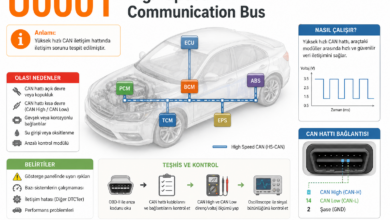
The U0140 code belongs to the same family as the U0100 code, the U0101 code, and the U0121 code. All involve the CAN bus network that connects your vehicle’s modules, and all share a similar diagnostic approach. But the U0140 code is specific to the BCM, and its symptoms are distinctly body-electrical in nature.
What You’ll Notice
- Check engine light on, often alongside multiple other warning lights
- Power windows not responding or working intermittently
- Central locking not working or behaving erratically
- Interior lights flickering or not working
- Exterior lights behaving abnormally
- Horn not functioning
- Alarm system triggering randomly or failing to arm
- Wipers not responding correctly
- Climate control display going blank or showing errors
- Keyless entry not functioning
- On some vehicles, the vehicle may not start at all if the BCM manages the immobiliser
The U0140 code can produce an overwhelming number of symptoms simultaneously. When a driver describes their car as “going haywire” — multiple unrelated electrical things failing at once — the U0140 code is often the explanation. All those symptoms have one cause: the BCM is offline.
What the BCM Does and Why It Matters
The body control module is the electrical hub of your vehicle’s comfort and convenience systems. Unlike the ECM — which manages the engine — or the TCM — which manages the transmission — the BCM’s domain is everything else. Every time you press the button to lock the doors, turn on the wipers, or activate the hazard lights, the BCM is involved.
The BCM communicates with other modules via the CAN bus network. It shares data with the ECM, the instrument cluster, the theft deterrent system, and other modules that need to know about door status, ignition state, and other body-related inputs. When the U0140 code cuts off this communication, modules that depend on BCM data lose their inputs — which is why U0140 often triggers faults in systems that seem completely unrelated to the BCM.
According to SAE J1979 OBD-II standards, the U0140 code is stored when the ECM or another module attempts to communicate with the BCM and receives no valid response within the expected timeframe.
What Usually Causes the U0140 Code
1. Faulty body control module The BCM itself has failed. BCM failure can result from water damage, electrical surge, internal component failure, or age on high-mileage vehicles. A failed BCM produces the U0140 code regardless of how healthy the wiring and CAN bus are. On some vehicles, BCM failure is preceded by a period of intermittent U0140 codes and erratic electrical behavior before the module fails completely.
2. CAN bus wiring fault The wiring connecting the BCM to the CAN bus network can develop a short, an open circuit, or high resistance from heat damage, vibration, or corrosion. A single damaged wire in the CAN High or CAN Low circuit is enough to knock the BCM off the network and store the U0140 code. BCM wiring faults are particularly common on vehicles where the harness runs through door jambs — areas subject to repeated flexing every time a door opens and closes.
3. Corroded or damaged BCM connector The BCM typically has one or more large wiring harness connectors, and these connectors are a frequent cause of the U0140 code. Moisture ingress, corrosion on the terminal contacts, or a connector that has partially unseated can interrupt CAN bus communication. On many vehicles, the BCM is located under the dashboard or in the footwell — areas that can be exposed to water from a leaking windshield seal or a blocked cabin drain.
4. Weak or failing battery Low battery voltage disrupts CAN bus communication across the entire network. The U0140 code from a weak battery typically appears alongside other communication codes — U0100, U0101, U0121 — because multiple modules lose their connection simultaneously. Always test battery condition before replacing any modules when the U0140 code is stored.
5. Blown fuse in the BCM power circuit The BCM requires dedicated power to operate. A blown fuse in the BCM power circuit shuts the module down completely, producing the U0140 code. Most vehicles have multiple fuses protecting the BCM — refer to the owner’s manual or service documentation for the correct fuse locations. This is one of the quickest and cheapest causes of the U0140 code to check.
6. Water damage to the BCM Water intrusion is one of the most destructive causes of BCM failure and U0140. The BCM location varies by vehicle, but common locations — under the dashboard, in the footwell, or behind the glove box — are all vulnerable to water from a leaking windshield, a blocked sunroof drain, or a flooded cabin. Water-damaged BCMs typically require replacement, and the source of water intrusion must be fixed before fitting a new module.
7. Damaged CAN bus termination resistor The CAN bus network requires 120-ohm termination resistors at each end to function correctly. A failed termination resistor causes signal reflections that prevent reliable communication. The U0140 code from a termination resistor fault typically appears with multiple other communication codes because the network disruption affects all connected modules simultaneously.
8. Software or programming fault On some vehicles, a failed or incomplete BCM programming session — after a module replacement or a dealer software update — leaves the BCM in an unresponsive state that produces the U0140 code. If the code appeared immediately after dealer service, a programming fault should be investigated before any hardware replacement.
How Serious Is the U0140 Code?
Serious — and the severity depends on exactly what functions the BCM manages on your specific vehicle.
On some vehicles, the U0140 code causes inconvenience — power windows and locks stop working, but the car still starts and drives. On others, particularly vehicles where the BCM manages the immobiliser or the start enable signal, the U0140 code can prevent the vehicle from starting at all.
Beyond the immediate functional impacts, the BCM’s role in sharing data with other modules means the U0140 code can trigger secondary faults in systems that depend on BCM inputs — creating a cascade of warning lights and fault codes that can make diagnosis more complicated.
Address the U0140 code promptly. The longer it’s left, the more difficult it becomes to distinguish the BCM communication fault from the secondary faults it creates in other systems.
How to Diagnose the U0140 Code
Step 1 — Read all stored codes across all modules
Confirm the U0140 code and check for companion codes across every available module. Multiple U-series codes stored simultaneously — U0140 alongside U0100, U0101, or U0121 — strongly suggest a CAN bus or power supply fault rather than an isolated BCM failure. A single U0140 with no companion codes is more likely a BCM-specific fault. The freeze frame data tells you the exact conditions when communication was lost.
Step 2 — Check the battery and charging system
Test battery voltage at rest — 12.4–12.7V is healthy. Test charging voltage with the engine running — 13.7–14.7V confirms proper alternator output. A marginal battery is one of the most common and cheapest causes of the U0140 code. Replace the battery if it tests below 12.4V at rest before doing anything else. On vehicles with an AGM battery, use an AGM-compatible tester — a standard load tester gives inaccurate results on AGM batteries.
Step 3 — Check the BCM fuses
Locate all fuses associated with the BCM in your vehicle’s fuse box. A blown BCM fuse takes the module completely offline and stores the U0140 code. Replace any blown fuse with the correct amperage rating. If the new fuse blows immediately, there’s a short circuit in the BCM power supply that needs to be traced before fitting another fuse.
Step 4 — Inspect the BCM and its connectors
Locate the BCM — typically under the dashboard on the driver’s side, in the footwell, or behind the glove box depending on the vehicle. Disconnect the harness connectors and inspect them carefully:
- Look for corrosion or green oxidation on the terminal contacts
- Check for moisture or water staining inside the housing
- Verify all pins are fully seated and not bent or pushed back
- Look for any sign of water damage on the BCM housing itself
- Confirm each connector locks fully when reconnected
Clean any corrosion with electrical contact cleaner and reconnect firmly. Clear the U0140 code and test all BCM-controlled functions before concluding the module has failed.
Step 5 — Check for water intrusion
If the BCM shows any sign of moisture or the U0140 code appeared after heavy rain or a car wash, investigate water entry carefully. Check the windshield seal, the sunroof drains if equipped, and the cabin air intake for blockages. Trace any water staining in the footwell or under the dashboard back to its source. Fix the water entry point before replacing the BCM — otherwise the replacement module suffers the same fate.
Step 6 — Measure CAN bus resistance
With the ignition off and the scan tool disconnected, measure resistance between the CAN High and CAN Low wires at the OBD2 port. A healthy CAN bus reads approximately 60 ohms. A significantly higher reading indicates an open circuit on the network. A reading near zero indicates a short between CAN High and CAN Low. Either condition produces the U0140 code alongside other communication faults.
Step 7 — Check BCM power and ground
With a multimeter, verify the BCM is receiving proper supply voltage at its power pins and has solid ground connections. No supply voltage points to a fuse or wiring fault upstream of the module. A loose or corroded ground means the BCM can’t function even with good power supply — producing the U0140 code regardless of how healthy the CAN bus wiring is.
Step 8 — Attempt BCM communication with a scan tool
Use a scan tool capable of accessing BCM data directly. If the scan tool can communicate with the BCM, the module itself is likely functional and the U0140 code is caused by a CAN bus wiring fault between the ECM and BCM. If no tool can reach the BCM despite confirmed good power and ground, the module has either failed internally or has a severe wiring fault on its CAN bus connections specifically.
Step 9 — Inspect door jamb wiring
On vehicles where the U0140 code is intermittent — appearing and disappearing without a clear pattern — inspect the wiring harnesses that run through the door jambs. These harnesses flex thousands of times as doors open and close, and internal wire breaks are common at this location. Gently flex the harness while monitoring for changes in BCM communication to expose an intermittent fault.
How to Fix the U0140 Code
Replace the battery — If battery voltage is marginal, this is the first repair. A healthy battery resolves U0140 codes caused by low-voltage network disruption far more cheaply than any module-level repair.
Replace the blown BCM fuse — If a BCM fuse is blown, replace it with the correct amperage rating. If it blows again, trace and repair the short circuit in the power supply before fitting another fuse.
Clean or repair the BCM connector — Clean corroded terminals thoroughly with electrical contact cleaner. Replace the connector pigtail if terminals are damaged beyond cleaning. Ensure all connectors lock fully when reconnected.
Repair door jamb wiring — If an intermittent break in the door jamb wiring is causing the U0140 code, repair or replace the affected section of harness. This is a common and relatively inexpensive fix that resolves intermittent U0140 faults on many vehicles.
Repair CAN bus wiring — Any damaged wiring in the CAN bus circuit to the BCM needs proper repair using automotive-grade wire and heat-shrink connectors. Secure the repaired harness away from areas subject to repeated flexing or heat exposure.
Fix water intrusion — Before replacing the BCM, fix any water entry points. A new BCM installed without addressing the water source fails the same way as the original.
Replace the BCM — If the module has failed internally, replacement is required. BCM replacement almost always requires programming to the vehicle’s VIN and configuration — this is not a plug-and-play repair. On some vehicles, additional modules need to be reprogrammed after BCM replacement because they store security or configuration data that references the original BCM.
U0140 on Specific Vehicle Makes
General Motors (Chevrolet, GMC, Buick, Cadillac): The U0140 code is well documented on GM vehicles. On many GM trucks and SUVs, the BCM is located in a position vulnerable to water intrusion from a leaking windshield or blocked cowl drain. GM has issued technical service bulletins for U0140 on several platforms addressing BCM connector issues and water intrusion paths.
Ford: On Ford vehicles, the U0140 code frequently relates to BCM connector corrosion or battery condition. Ford’s GEM (Generic Electronic Module) on older models and the BCM on newer models are known to produce U0140 from connector degradation on high-mileage examples. Battery replacement resolves a significant percentage of U0140 faults on Ford vehicles.
Toyota and Lexus: The U0140 code on Toyota and Lexus vehicles often involves the multiplex network communication module rather than a traditional BCM. Water intrusion near the module location and connector corrosion are the most common causes. Toyota’s modular architecture means U0140 symptoms can vary significantly between models.
Volkswagen and Audi: On VAG group vehicles, the U0140 code relates to the Central Electronics module (Comfort Control Module) which performs BCM functions. These modules are sensitive to water intrusion — particularly on models with known sunroof drain issues. VCDS or a VAG-compatible scan tool is needed for proper diagnosis on these vehicles.
BMW and Mercedes-Benz: On European premium vehicles, the U0140 code can involve the FRM (Footwell Module) on BMW or the SAM (Signal Acquisition Module) on Mercedes. Both are known water intrusion failure points. A dealer-level scan tool is typically required for proper BCM diagnosis on these platforms.
What It Might Cost to Fix the U0140 Code
| Repair | Estimated Cost |
|---|---|
| Battery replacement | $80 – $200 |
| BCM fuse replacement | $5 – $20 |
| Connector cleaning / repair | $50 – $200 |
| Door jamb wiring repair | $100 – $300 |
| CAN bus wiring repair | $150 – $500 |
| Water intrusion repair | $100 – $500 |
| BCM replacement + programming | $300 – $1,500+ |
Costs vary significantly by vehicle. European premium vehicles with sophisticated BCM programming requirements are at the higher end of the replacement cost range.
Related Codes
- U0001 — High Speed CAN Communication Bus
- U0100 — Lost Communication With ECM/PCM
- U0101 — Lost Communication With TCM
- U0121 — Lost Communication With ABS Control Module
- U0155 — Lost Communication With Instrument Panel
- U0141 — Lost Communication With Body Control Module A
- U0073 — Control Module Communication Bus Off
Frequently Asked Questions
Can I drive with the U0140 code? It depends on which BCM functions are affected on your specific vehicle. If only convenience features like power windows and locks are down, short trips are possible. If the BCM manages the immobiliser or start enable signal, the vehicle may not start at all. In either case, get the U0140 code diagnosed promptly — extended driving with BCM communication lost can create secondary faults in other systems.
Why did so many things stop working at once? Because the BCM controls or coordinates most of the vehicle’s electrical convenience and safety features. When the U0140 code takes the BCM offline, every function it manages fails simultaneously. Multiple unrelated things failing at once — windows, locks, lights, alarm — almost always points to the BCM rather than multiple individual component failures.
Will the U0140 code clear itself? If the fault is intermittent — a marginal battery or a loose connector — the U0140 code may clear temporarily when conditions improve. But if the underlying fault remains, it returns. Clearing the U0140 code without fixing the problem just resets the counter temporarily.
How do I know if the BCM needs replacing or just programming? If a scan tool can communicate with the BCM, the module itself is functional — the issue may be a software fault or a programming error rather than hardware failure. If no tool can reach the BCM despite confirmed good power, ground, and CAN bus wiring, the module has failed internally and needs replacement.
Can water damage cause the U0140 code even if the car looks dry inside? Yes. Water damage to the BCM can occur from small amounts of moisture that dried out long before you noticed any problem. Look for water staining under the dashboard or on the BCM housing. Salt residue or corrosion marks indicate previous water exposure even if everything feels dry now.
Is BCM replacement always needed for the U0140 code? No — BCM replacement is the least common fix. Battery issues, blown fuses, connector corrosion, and CAN bus wiring faults are all more frequent causes of the U0140 code. Replace the BCM only after all other causes have been definitively ruled out through systematic diagnosis.
Why does the U0140 code sometimes cause a no-start? On vehicles where the BCM manages the immobiliser or provides the start enable signal to the ECM, a BCM that’s offline prevents the ECM from receiving the authorization needed to start the engine. The U0140 code in a no-start scenario on these vehicles is the direct cause — not just a coincidence.
For more information on CAN bus communication and vehicle electrical systems, visit the National Highway Traffic Safety Administration (NHTSA) or the SAE International standards library.
This guide is for informational purposes only. For an accurate diagnosis, always consult a qualified mechanic.