U0101 Code: Lost Communication With TCM
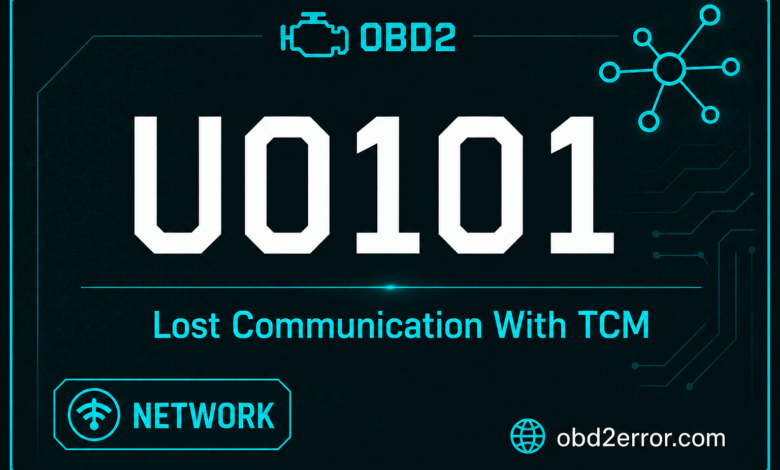
The U0101 code means your vehicle’s control modules have lost communication with the transmission control module — the TCM. When the U0101 code is stored, the network that connects your car’s computers has lost contact with the module responsible for managing every aspect of how your transmission behaves.
Modern automatic transmissions don’t operate on their own. The TCM receives data from the engine control module, the ABS module, the body control module, and other systems — and uses all of that information to decide when to shift, how firmly to shift, and how to respond to driving conditions. When the U0101 code cuts off that communication, the transmission loses its guidance system.
The U0101 code is part of the same family as the U0100 code — lost communication with the ECM — and the U0155 code — lost communication with the instrument panel. All three involve the CAN bus network that connects your vehicle’s modules, and all three share similar diagnostic approaches. But the U0101 code is specific to the transmission control module, and its symptoms are distinctly transmission-focused.
What You’ll Notice
- Check engine light on, often alongside a transmission warning light
- Transmission stuck in a single gear — usually second or third — known as limp mode
- Harsh, erratic, or absent gear shifts
- Transmission refusing to shift up or down under any conditions
- Torque converter clutch not engaging
- Speedometer behaving erratically on some vehicles
- Engine revving high with little forward motion in some limp mode scenarios
- On some vehicles, the transmission may default to manual shift mode only
The U0101 code almost always produces immediate, noticeable transmission symptoms. Unlike some fault codes that allow the vehicle to drive almost normally, losing communication with the TCM typically puts the transmission into a protective limp mode that’s impossible to ignore. If your transmission suddenly started behaving strangely and your scanner returned the U0101 code, the two are almost certainly connected.
How the TCM Communicates With the Rest of the Vehicle
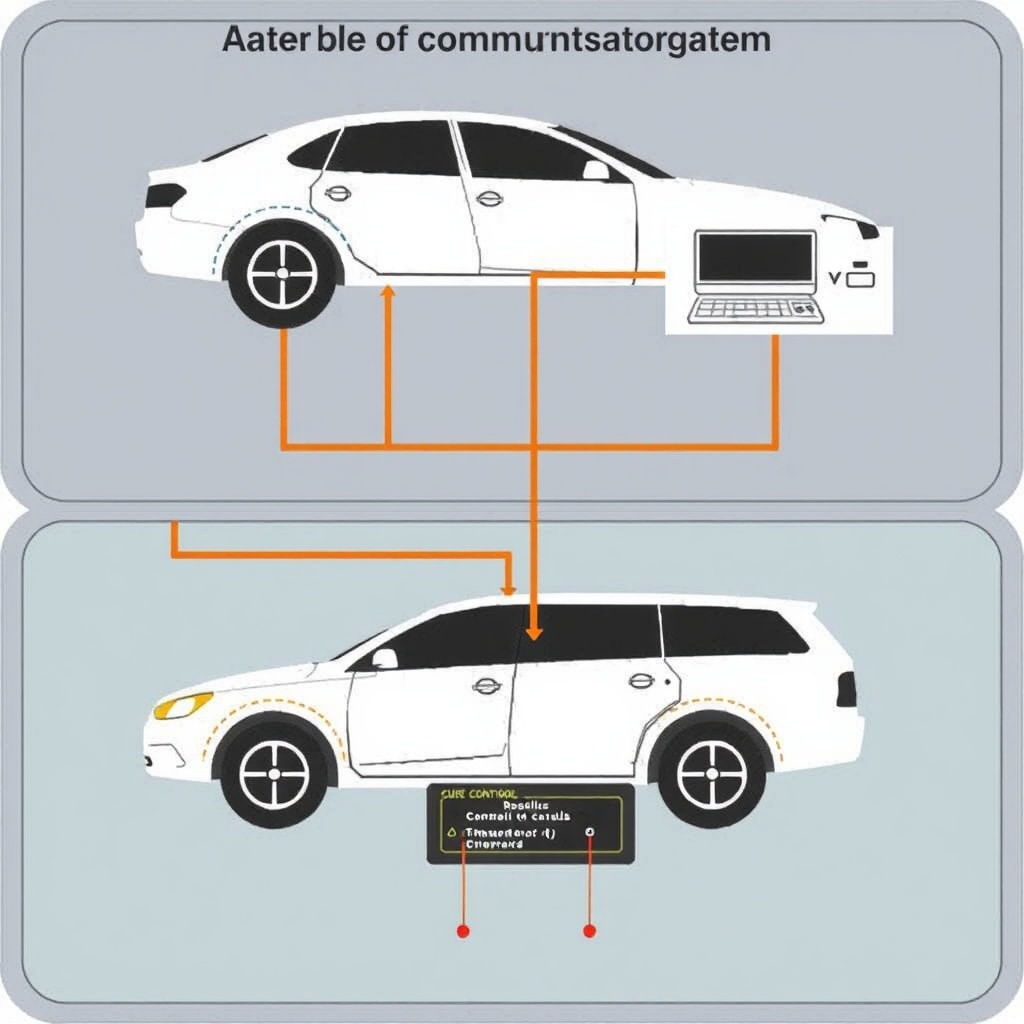
The transmission control module communicates with other modules via the CAN bus — the Controller Area Network. This is the same communication backbone involved in the U0001 code. The CAN bus allows all the vehicle’s modules to share data in real time without needing direct wiring between each pair of modules.
The TCM needs data from the ECM to coordinate shift timing with engine load and throttle position. It needs data from the ABS module for traction control integration. It sends data back to the instrument cluster for the gear position indicator. When the U0101 code is stored, all of this communication has broken down — and the TCM is either completely offline or unreachable by the other modules.
According to SAE J1979 OBD-II standards, the U0101 code is stored when the ECM or another module attempts to communicate with the TCM and receives no valid response within the expected timeframe.
What Usually Causes the U0101 Code
1. Faulty transmission control module The TCM itself has failed. This is less common than wiring faults but does happen — particularly on higher-mileage vehicles, vehicles that have experienced water intrusion, or after a significant electrical event like a battery short or jump-start error. A failed TCM produces the U0101 code regardless of how healthy the wiring and CAN bus are.
2. CAN bus wiring fault The wiring that connects the TCM to the CAN bus network can develop a short, an open circuit, or a high-resistance connection over time. The U0101 code from a wiring fault is particularly common on vehicles where the TCM wiring harness runs through areas exposed to heat, vibration, or moisture — such as near the transmission tunnel or under the vehicle. A single damaged wire in the CAN High or CAN Low circuit is enough to knock the TCM off the network.
3. Corroded or damaged TCM connector The connector between the TCM wiring harness and the module itself is a common failure point. Moisture ingress, corrosion on the terminal contacts, or a connector that has partially unseated can interrupt the CAN bus signal and store the U0101 code. On many vehicles, the TCM is located inside or near the transmission — in an environment that’s warm, wet, and vibration-prone, which accelerates connector degradation.
4. Weak or failing battery Low battery voltage disrupts CAN bus communication across the entire network. The U0101 code from a weak battery often appears alongside other communication codes — U0100, U0155, or similar — because multiple modules lose their connection simultaneously when voltage drops below the threshold needed for reliable communication. Always test the battery before replacing any modules when the U0101 code is stored.
5. Blown fuse in the TCM power circuit The TCM requires a dedicated power supply to operate. A blown fuse in the TCM power circuit shuts the module down completely — producing the U0101 code because the TCM is no longer on the network. This is one of the quickest and cheapest causes of the U0101 code to check, and it should be verified early in the diagnostic process.
6. Damaged CAN bus termination resistor The CAN bus network requires a 120-ohm termination resistor at each end to function correctly. A failed or missing termination resistor causes signal reflections on the network that prevent reliable communication. The U0101 code from a termination resistor fault often appears with multiple other communication codes because the entire network is affected, not just the TCM circuit.
7. Water intrusion into the TCM Many TCMs are located in or near the transmission, where they can be exposed to water from flooding, pressure washing, or a failed transmission fluid cooler. Water damage to the TCM produces the U0101 code and typically requires module replacement. If water damage is the cause, address the source of intrusion before fitting a new module.
8. Recent reprogramming or software issue If the U0101 code appeared after a dealer service visit involving TCM reprogramming, a software fault or incomplete flash may have left the module in an unresponsive state. This is relatively rare but worth noting if the timing of the code’s appearance correlates with recent service.
How Serious Is the U0101 Code?
Very serious — and immediately noticeable.
Unlike codes that allow the vehicle to continue driving normally, the U0101 code almost always puts the transmission into limp mode. Limp mode protects the transmission from damage when it’s operating without proper ECM coordination, but it makes the vehicle very difficult to drive normally — particularly in city traffic or on highways where varied speed is required.
Beyond the drivability impact, driving for extended periods in limp mode puts additional stress on the transmission components that are operating without their normal control logic. Diagnose and repair the U0101 code as quickly as possible rather than driving on it indefinitely.
If the vehicle is experiencing a no-start or complete electrical failure alongside the U0101 code, the fault may be in the battery or main power supply rather than the TCM specifically. Always check the basics first.
How to Diagnose the U0101 Code
Step 1 — Read all stored codes across all modules
Confirm the U0101 code and check for companion codes across every module. This step is critical. Multiple U-series codes stored simultaneously — U0101 alongside U0100, U0155, or U0121 — strongly suggest a CAN bus or power supply fault rather than an isolated TCM failure. A single U0101 with no companion codes is more likely a TCM-specific fault. The freeze frame data stored with the U0101 code tells you the conditions when communication was lost.
Step 2 — Check the battery and charging system
Before any module-level diagnosis, test the battery. Check voltage at rest — 12.4–12.7V is healthy. Check voltage with the engine running — 13.7–14.7V confirms the alternator is charging correctly. A battery below 12V at rest or a charging voltage outside the normal range can cause the U0101 code through low-voltage network disruption. Replace the battery if marginal before proceeding further.
Step 3 — Check the TCM fuse
Locate the TCM fuse in your vehicle’s fuse box — refer to the owner’s manual or service information for the correct fuse location. A blown fuse is a quick find and a cheap fix for the U0101 code. If the replacement fuse blows immediately, there’s a short circuit in the TCM power supply circuit that needs tracing.
Step 4 — Inspect the TCM connector
Locate the TCM and inspect its connector. On most vehicles the TCM is mounted on or inside the transmission, or in the engine bay near the firewall. Disconnect the connector and inspect the terminals for:
- Corrosion or green oxidation on the pins
- Moisture or water staining inside the housing
- Bent or pushed-back terminals
- Physical damage to the connector body or locking tab
Clean any corrosion with electrical contact cleaner, reconnect firmly, and clear the U0101 code. Test drive to see if it returns.
Step 5 — Measure CAN bus resistance
With the ignition off and the scan tool disconnected, measure resistance between the CAN High and CAN Low wires at the OBD2 port. A healthy CAN bus reads approximately 60 ohms — the two 120-ohm termination resistors in parallel. A reading significantly higher than 60 ohms indicates an open circuit somewhere on the network. A reading near zero indicates a short between CAN High and CAN Low. Either condition can produce the U0101 code.
Step 6 — Check TCM power and ground
With a multimeter, verify the TCM is receiving proper supply voltage at its power pins and has solid ground connections. No supply voltage means a wiring fault or blown fuse upstream of the module. A floating ground means the module can’t function regardless of how good the CAN bus wiring is.
Step 7 — Attempt TCM communication with a professional scan tool
A dealer-level or advanced scan tool can attempt direct communication with the TCM independently of other modules. If the scan tool can communicate with the TCM but the ECM reports U0101, the fault may be in the specific CAN bus wiring between the ECM and TCM rather than in the TCM itself. If no tool can communicate with the TCM, the module is offline — either due to no power, no ground, or internal failure.
Step 8 — Inspect CAN bus wiring to the TCM
Trace the CAN bus wiring from the OBD2 port to the TCM and check for physical damage. Look for areas where the harness may have chafed against metal, been pinched, or been exposed to excessive heat. An intermittent U0101 code — one that comes and goes — often traces back to a wiring harness that makes contact most of the time but fails under vibration or specific temperatures.
How to Fix the U0101 Code
Replace the battery — If battery voltage is marginal, this is the first repair. A healthy battery resolves U0101 codes caused by low-voltage network disruption and costs far less than module replacement.
Replace the blown fuse — If the TCM fuse is blown, replace it with the correct amperage rating. If it blows again, trace the short circuit in the power supply before fitting another fuse.
Repair the TCM connector — Clean corroded terminals with electrical contact cleaner and a terminal brush. Replace the connector pigtail if terminals are damaged beyond cleaning. Ensure the connector locks fully when reconnected.
Repair CAN bus wiring — Any damaged, chafed, or broken wiring in the CAN bus circuit to the TCM needs proper repair. Use automotive-grade wire and heat-shrink connectors. Secure the repaired harness to prevent future damage.
Replace the TCM — If the module has failed internally — confirmed by no communication on any scan tool despite healthy power, ground, and CAN bus wiring — replacement is the fix. TCM replacement almost always requires programming to the vehicle’s VIN and specific transmission configuration. This is not a plug-and-play repair — dealer or specialist programming is typically required.
Address water intrusion — If water damage caused the U0101 code, fix the source of water entry before fitting a new TCM. A new module installed in a water-prone location fails the same way.
U0101 on Specific Vehicle Makes
General Motors (Chevrolet, GMC, Buick, Cadillac): The U0101 code is a known fault on GM vehicles equipped with 6-speed automatic transmissions — particularly the 6L80 and 6L90 found in trucks and SUVs. TCM connector corrosion and wiring harness damage near the transmission are the most common causes. GM has issued technical service bulletins for U0101 on several platforms.
Ford: On Ford vehicles with 6R80 and 10R80 transmissions, the U0101 code occasionally appears from TCM software issues that require dealer reprogramming. Physical wiring faults near the transmission tunnel are also a known cause on higher-mileage examples.
Toyota and Lexus: The U0101 code on Toyota and Lexus vehicles is often related to connector corrosion on the TCM, particularly on vehicles operated in humid climates. The TCM location varies by model — on some Toyota platforms it’s integrated with the transmission, on others it’s in the engine bay.
BMW: On BMW vehicles, the U0101 code can relate to the EGS (electronic gearbox system) module rather than a traditional TCM. BMW’s ZF-sourced transmissions use sophisticated control modules that are sensitive to voltage fluctuations — battery condition is particularly important to check on BMW U0101 diagnoses.
Honda and Acura: Honda vehicles with CVT transmissions are known to produce the U0101 code from TCM software faults. Honda dealers have issued reprogramming updates for several CVT-equipped models that address persistent U0101 faults.
What It Might Cost to Fix the U0101 Code
| Repair | Estimated Cost |
|---|---|
| Battery replacement | $80 – $200 |
| Fuse replacement | $5 – $20 |
| Connector repair / cleaning | $50 – $200 |
| CAN bus wiring repair | $150 – $500 |
| TCM reprogramming (software) | $80 – $200 |
| TCM replacement + programming | $400 – $1,500+ |
Costs vary significantly by vehicle make, model, and TCM location. Transmission-mounted TCMs typically cost more to access and replace than engine bay units.
Related Codes
- U0001 — High Speed CAN Communication Bus
- U0100 — Lost Communication With ECM/PCM
- U0155 — Lost Communication With Instrument Panel
- U0121 — Lost Communication With ABS Control Module
- U0073 — Control Module Communication Bus Off
- P0700 — Transmission Control System Malfunction
Frequently Asked Questions
Can I drive with the U0101 code? The transmission will almost certainly be in limp mode with the U0101 code active — limited to one or two gears with no normal shifting. Short, slow-speed trips to a workshop are possible, but driving normally is not. Extended driving in limp mode adds unnecessary stress to the transmission. Get the U0101 code diagnosed as soon as possible.
Will the U0101 code clear itself? If the fault is intermittent — a marginal battery or a loose connector — the U0101 code may clear temporarily. But if the underlying fault remains, it returns the next time communication is lost. Clearing the code without fixing the problem just delays the diagnosis.
How do I know if it’s the TCM or the wiring? If a scan tool can communicate with the TCM directly, the module itself is likely fine and the fault is in the CAN bus wiring between the ECM and TCM. If no scan tool can reach the TCM, check power, ground, and fuses first. If all of those are healthy and the TCM still can’t be reached, the module has failed internally.
Can a bad ground cause the U0101 code? Yes. The TCM requires a solid ground connection to function. A corroded or loose ground strap produces exactly the symptoms associated with the U0101 code — the module appears offline even though it has supply voltage. Always check ground connections as part of U0101 code diagnosis.
Is TCM replacement always needed for the U0101 code? No — in fact, TCM replacement is the least common fix for the U0101 code. Battery issues, blown fuses, connector corrosion, and CAN bus wiring faults are all more frequently the cause. Replace the TCM only after all other causes have been definitively ruled out through systematic diagnosis.
For more information on CAN bus communication and OBD-II diagnostic standards, visit the National Highway Traffic Safety Administration (NHTSA) or the SAE International standards library.
This guide is for informational purposes only. For an accurate diagnosis, always consult a qualified mechanic.