What Is the P0334 Code and What Does It Mean for Your Vehicle?
P0334 Code When your vehicle’s On-Board Diagnostics (OBD-II) system detects an irregularity in the engine’s combustion process, it triggers specific diagnostic trouble codes to alert you. One such critical alert is the P0334 code, which formally stands for Knock Sensor 2 Circuit Intermittent (Bank 2).
This specific code indicates that the Powertrain Control Module (PCM) has registered an unstable, erratic, or fluctuating electrical voltage signal from the knock sensor circuit that fails to maintain a consistent baseline reading. Under normal operating conditions, knock sensors act as the “ears” of your engine, constantly listening for structural vibrations or abnormal metallic sounds caused by pre-ignition or detonation. When the signal from Bank 2—the side of the engine that does not contain cylinder number one—remains unpredictable or drops out randomly, the PCM logs the P0334 code and illuminates the Check Engine Light to prevent catastrophic structural degradation. P0334 Code
Unlike codes that indicate a constant high or low voltage fault, an intermittent reading means the circuit is actively fluctuating between working perfectly and failing entirely. This erratic communication makes diagnosing the issue slightly more complex, as the fault may appear and disappear based on engine temperature, vehicle speed, or road vibrations.
The Role of Knock Sensor 2 in Engine Protection
To comprehend why the P0334 code is so crucial, one must understand how a piezoelectric knock sensor operates. These small sensors contain specialized ceramic crystals that generate a low-voltage electrical signal whenever they encounter structural vibrations. P0334 Code
- Vibration Monitoring: P0334 Code As the engine runs, the sensor continuously transmits an alternating current (AC) voltage signal to the PCM.
- Ignition Adjustment: If the fuel-air mixture ignites prematurely, it produces an explosive shockwave known as engine knock or pinging.
- Protective Strategy: Upon receiving a high-frequency voltage signal indicating a knock, the PCM instantly retards the ignition timing. This minor adjustment alters the exact millisecond the spark plug fires, neutralizing the knock and safeguarding internal components like pistons, wrist pins, and connecting rods.P0334 Code
When the PCM detects an unstable or erratic electrical signal coming from Knock Sensor 2, it loses its ability to accurately monitor engine vibrations. Consequently, the vehicle enters a protective failsafe strategy to prevent potential damage. Because the signal drops out unpredictably, the engine control unit cannot establish a reliable timing advancement profile, which often results in fluctuating engine performance.
Common Causes Behind the P0334 Code Activation
An erratic voltage reading in the knock sensor circuit rarely stems from a single isolated variable. Diagnosing a P0334 code requires a methodical exploration of several potential electrical and mechanical failures. P0334 Code
1. Intermittent Internal Faults in Knock Sensor 2
The sensor itself can suffer internal electrical connection failures or material degradation due to years of intense thermal cycling. As the engine warms up and expands, tiny micro-cracks inside the ceramic element can open up, breaking the electrical path. Once the engine cools down, the materials contract, and connection is restored, creating a classic intermittent scenario.P0334 Code
2. Corroded, Frayed, or Loose Wiring Harness
Knock sensors are typically positioned deep within the engine valley or attached to the lower engine block. This location exposes the wiring harness to extreme heat, engine oil leaks, and environmental debris. Over time, wire insulation can melt, crack, or rub against sharp metallic edges, causing a short-to-voltage condition or an occasional grounding issue whenever the car hits a bump.
3. Rodent Damage inside the Engine Valley
Because knock sensors on V6 and V8 engines are often nestled beneath the intake manifold, this warm, secluded area serves as an appealing nesting ground for rodents. Mice and rats frequently chew through the knock sensor harness wiring. If they only partially gnaw through a wire, the copper core will intermittently make contact with neighboring engine components during vehicle acceleration or cornering, triggering the P0334 code.
4. Poor Electrical Connections and Loose Connectors
Corrosion within the electrical plugs, bent pins, or loose locking tabs can disrupt the delicate voltage threshold required by the PCM. Moisture intrusion into the connector plug is a frequent catalyst for high resistance or voltage spikes. If the locking clip on the harness connector is broken, engine vibrations will cause the plug to back out slightly, resulting in an intermittent connection.
5. Mechanical Engine Pinging or Severe Component Vibration
While the P0334 code is fundamentally categorized as an electrical circuit fault, severe mechanical instability—such as a loose engine accessory bracket, a broken motor mount, or a failing water pump bearing—can create external vibrations that confuse the sensor. The sensor interprets these random physical impacts as an erratic engine knock, overloading the circuit calculations inside the PCM.
Notable Symptoms of a P0334 Code
A primary challenge when dealing with a P0334 code is that symptoms can vary wildly depending on how the PCM reacts to the missing or skewed data. Some vehicles may exhibit noticeable driveability degradation, while others might only display visual warnings.
+-------------------------------------------------------------+
|                     P0334 SYMPTOM MATRIX                     |
+---------------------------------+---------------------------+
| Core Symptom                    | Severity / Impact         |
+---------------------------------+---------------------------+
| Check Engine Light Activation   | Immediate Visual Alert    |
| Pronounced Engine Knocking      | High Risk of Damage       |
| Significant Loss of Acceleration| Triggered Failsafe Mode   |
| Decreased Fuel Efficiency       | Long-term Economic Cost   |
| Engine Hesitation or Misfires   | Intermittent or Constant  |
+---------------------------------+---------------------------+
Illumination of the Check Engine Light
The most immediate sign is the activation of the Malfunction Indicator Lamp (MIL). The PCM logs the fault when the erratic voltage threshold is breached across multiple drive cycles.
Audible Engine Knocking or Pinging
Because the PCM can no longer rely on Knock Sensor 2 to manage ignition parameters consistently, it may fail to retard timing effectively under load. This can result in audible metallic pinging or rattling noises during acceleration, especially when climbing hills or carrying heavy loads.
Reduced Engine Performance and Acceleration Lag
To protect internal hardware from potential destruction, many modern PCMs implement a conservative strategy often referred to as “limp mode.” The computer advances or retards ignition timing to a fixed, safe baseline, which noticeably reduces throttle responsiveness and overall horsepower. Because this code is intermittent, you might feel the car suddenly lose power, run poorly for a few miles, and then mysteriously return to full power once the circuit reconnects.
Increased Fuel Consumption
When the engine defaults to a backup timing map, the combustion process loses its optimal efficiency. The engine will burn more fuel than necessary, leading to a drop in miles per gallon (MPG).
Comprehensive Step-by-Step Diagnostic Framework for P0334
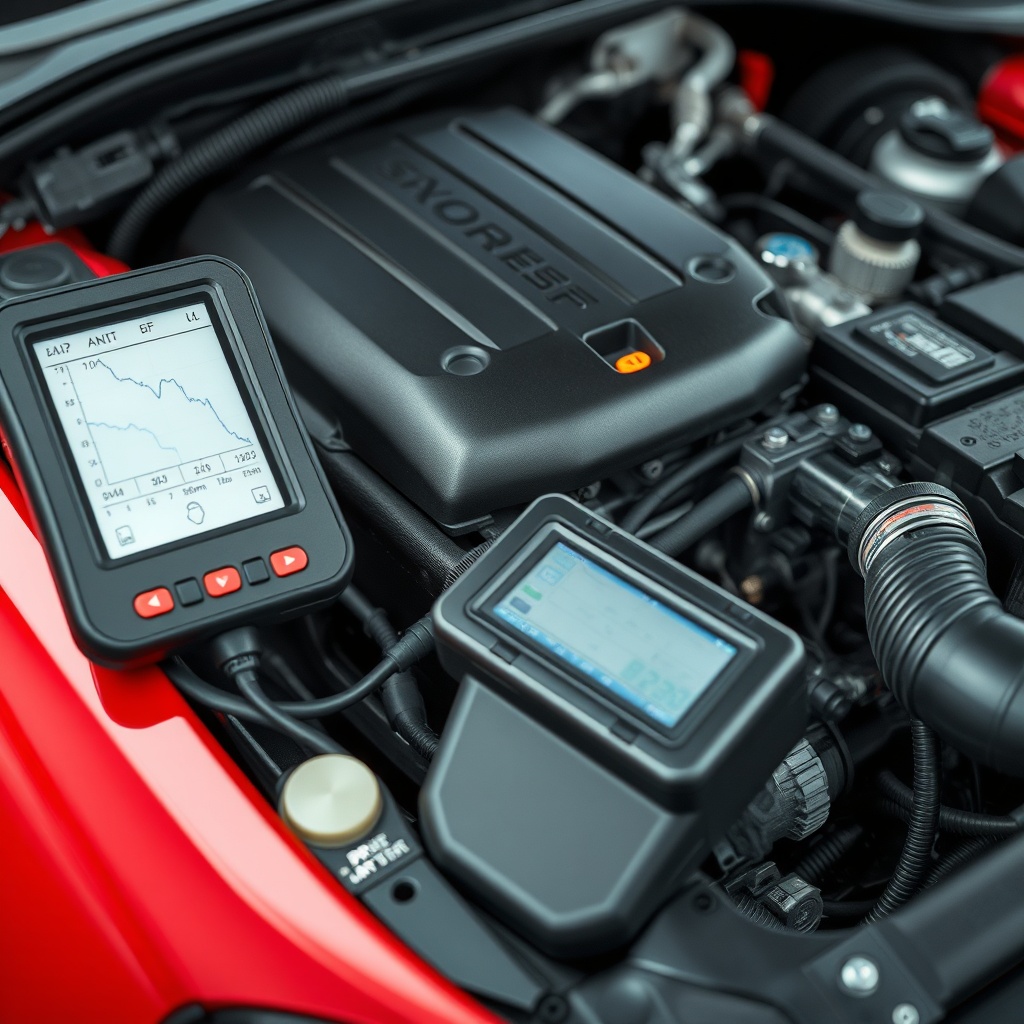
Resolving a P0334 code efficiently requires a systematic diagnostic approach using specialized automotive tools. Avoid the temptation to simply replace the sensor without confirming the integrity of the surrounding circuit.
Equipment Required:
- Advanced OBD-II Diagnostic Scanner with Live Data Capabilities
- Digital Volt-Ohm Meter (DVOM)
- Vehicle-Specific Wiring Diagrams
- Safety Gear (Gloves and Eye Protection)
Step 1: Read Live Data and Freeze Frame Parameters
Connect your OBD-II scanner to the vehicle’s diagnostic port. Retrieve all stored codes, pending codes, and freeze-frame data. Freeze-frame data is invaluable because it logs the exact engine RPM, coolant temperature, and load conditions present when the P0334 code originally tripped. Clear the codes and perform a brief road test to see if the fault returns immediately.
Step 2: Conduct a Meticulous Visual Inspection
Allow the engine to cool completely. If your vehicle houses the knock sensor beneath the intake manifold, you may need an inspection mirror or an endoscope camera to view the harness. Look closely for signs of mouse nests, chewed insulation, brittle wires, or pooled engine oil/coolant in the engine valley. If the wiring harness is frayed or melted, it must be repaired or replaced before proceeding.
Step 3: Inspect and Test the Electrical Connector
Disconnect the wiring harness plug leading to Knock Sensor 2. Inspect the internal pins for green or white corrosion, moisture intrusion, or bent terminals. Clean the connector with a dedicated electronic cleaner spray if oxidation is present. Wiggle the connector plug while watching your diagnostic scanner’s live data to see if you can manually reproduce the fault.
Step 4: Perform Circuit Voltage Testing with a DVOM
Turn the vehicle’s ignition key to the ON position without starting the engine (Key On Engine Off – KOEO). Set your digital multimeter to measure DC voltage.
- Measure the reference voltage channel sent from the PCM to the sensor connector. Check this against the factory service manual specifications (typically around 5V or 2.5V depending on design).
- If the measured voltage bounces around drastically while the car is idling or while you gently move the harness loom, you have isolated a physical short or break in the wiring.
Step 5: Evaluate Sensor Resistance
Switch your DVOM to the resistance (Ohms) setting. Measure the internal resistance of Knock Sensor 2 across its terminals or between the signal terminal and the engine ground (for single-wire sensors).
- Compare your reading with the manufacturer’s nominal resistance spectrum.
- Tap gently on the engine block near the sensor using a small wrench or screwdriver while monitoring the resistance meter. If the reading drops out or goes to open loop (OL) during the tapping test, the internal piezoelectric crystal is damaged.
How to Properly Repair and Fix a P0334 Code
Once you have isolated the root cause of the fault, you can execute the appropriate repair protocol. The difficulty of this process depends heavily on the physical architecture of your vehicle’s engine block.
Replacing the Knock Sensor
If testing reveals an internal component failure, the sensor must be replaced. On inline engines, this can often be done from underneath the vehicle or by reaching behind the intake manifold block. On V-configured engines, the process often requires draining a portion of the cooling system and removing the upper and lower intake manifolds to access the valley pan.
When installing the new sensor, you must use a precision torque wrench. Knock sensors are highly sensitive to installation torque; over-tightening can crush the piezoelectric crystal, while under-tightening dampens the acoustic transfer. Both scenarios will quickly cause a recurring circuit fault. Always reference factory specifications, which typically range between 15 to 25 Nm (11 to 18 lb-ft).
Harness Rehabilitation and Replacement
If the wiring harness was damaged by mechanical friction or rodents, splice in a new sub-harness using high-grade automotive wire heat-shrink connectors to seal out moisture. Given the intense labor required to remove intake manifolds on many engines, it is highly recommended to replace the entire knock sensor sub-harness whenever you replace the sensors, even if the old wire looks acceptable visually.
Critical Differences Between P0332 and P0334 Codes
Understanding the relationship between neighboring fault codes can help prevent diagnostic confusion. A common point of confusion occurs when evaluating the circuit profile of Bank 2 sensors. For instance, comparing the mechanics of a low-input fault against an intermittent circuit fault helps clarify why the PCM behaves differently under each scenario.
While both trouble codes isolate an issue within Knock Sensor 2 on Bank 2, they represent opposite ends of the electrical fault spectrum:
- P0332: Indicates a low electrical input condition. This generally implies that the circuit is experiencing a total loss of voltage, frequently caused by a severed wire, a completely disconnected plug, or a sensor that has shorted directly to the chassis ground.
- P0334: Signifies an intermittent circuit condition. This means the signal wire is not permanently broken or permanently shorted. Instead, it fluctuates irregularly between acceptable and unacceptable operational ranges, making it an unpredictable issue caused by loose connections, thermal expansion, or physical road impacts shaking a damaged wire loom.
For further reference on automotive electrical systems and standardized diagnostic parameters, the Society of Automotive Engineers (SAE International) provides comprehensive automotive engineering standards that detail how OBD-II parameters are classified across global manufacturers.
Frequently Asked Questions (FAQ)
1. Is it safe to drive with a P0334 code active?
Driving short distances to a repair facility with a P0334 code is generally acceptable, but long-term operation under this condition is highly discouraged. Because the PCM loses its ability to accurately detect and suppress engine knock on Bank 2, severe pre-ignition could occur unnoticed, potentially leading to melted pistons, cracked cylinder heads, or bent connecting rods under high load.
2. Can low-quality fuel trigger a P0334 code?
Low-quality or low-octane fuel can cause severe mechanical engine knocking, but it typically triggers codes like P0325 or P0330 (generic knock sensor malfunctions) rather than an intermittent circuit code. However, if the mechanical pinging is violent and continuous, the sensor’s peak AC voltage output may over-saturate the circuit, contributing to an unstable reading on sensitive diagnostic systems.
3. Why are knock sensor repairs often so expensive?
The sensors themselves are relatively inexpensive, but the labor required to access them can drive up repair costs. In many modern V6 and V8 engine configurations, the sensors are placed deep inside the valley beneath the fuel injection rails and intake manifold assemblies. Accessing them requires removing several auxiliary engine components, a process that can take multiple hours of skilled mechanical labor.
4. Will clearing the code fix a P0334 issue permanently?
No, clearing the code with a scan tool will only turn off the Check Engine Light temporarily. If the underlying electrical short, wiring degradation, or internal sensor failure is not physically repaired, the PCM will re-detect the out-of-bounds voltage parameter and re-illuminate the light within one or two drive cycles.
5. Can a faulty PCM cause a P0334 code directly?
While it is technically possible for an internal PCM failure or software glitch to misinterpret knock sensor voltages, it is extremely rare. Hardware defects, wiring harness degradation, and connector corrosion account for more than 98% of documented P0334 code cases. Always verify all external circuits before concluding that the PCM is defective.
6. Do I need to replace both knock sensors at the same time?
While it is not mandatory to replace both sensors if only one is faulty, it is often recommended as a preventative measure. If your vehicle requires the removal of the intake manifold to access Knock Sensor 2, replacing both sensors and the linking wire harness simultaneously can save you significant labor costs down the line, as both sensors have experienced identical thermal wear and environmental conditions.
Detailed Technical Parameters and Engine Behavior Analysis
When analyzing a vehicle struggling with an active P0334 code, mechanical performance testing under controlled diagnostic loads can yield crucial insights. When the knock circuit displays intermittent functionality, monitoring specific fuel-trim adjustments and ignition advance cycles helps uncover hidden symptoms.
+-----------------------------------------------------------------------+
|                ENGINE METRICS DURING CIRCUIT DROPOUTS                 |
+-------------------------+----------------------+----------------------+
| Operational Parameter   | Stable Circuit State | Dropped Circuit State|
+-------------------------+----------------------+----------------------+
| Ignition Timing Advance | +18° to +24° (Opt.)  | Fixed +8° (Safe)     |
| Average Fuel-Air Ratio  | 14.7:1 (Stoich.)     | 12.5:1 (Rich/Prot.)  |
| Throttle Response Time  | 120ms (Instant)      | 450ms (Lagging)      |
| Exhaust Gas Temp (EGT)  | 650°C (Normal)       | 780°C (Elevated)     |
+-------------------------+----------------------+----------------------+
As illustrated by this empirical behavior matrix, an intermittent circuit failure forces the powertrain module to alternate rapidly between optimized maps and restricted industrial safety parameters. The continuous shifts between these operating profiles can cause subtle engine jerking or bucking under steady highway cruise conditions.
Exploring Waveform Diagnostics with an Oscilloscope
To conclusively catch an intermittent fault in the act, master technicians often bypass basic multi-meters and connect a dual-channel digital storage oscilloscope to the sensor signal ground and output terminals. While monitoring the operational waveform:
- A healthy knock sensor should display a consistent, low-amplitude AC signal that scales cleanly alongside rising engine speeds.
- When the P0334 code takes effect, the scope display will show sudden sharp vertical voltage dropouts, flatlines, or square-wave tracking signatures that run completely contrary to regular acoustic vibrations.
If these visual dropouts occur when you manually shake the main engine wiring junction or tap lightly on the sensor housing, you have isolated the structural breakdown zone. This precise method prevents you from wasting financial resources on functional replacement sensors when the true villain is simply a loose internal wire pin connection located further up the automotive wiring harness framework.