C0040: Right Front Wheel Speed Sensor Circuit Malfunction
In the complex world of automotive diagnostics, the C0040 code emerges as an essential indicator of potential malfunctions within the vehicle’s wheel speed sensor system. Understanding this diagnostic trouble code necessitates a thorough examination of the intricate dynamics governing the right front wheel speed sensor’s functionality. This article delves into crucial aspects of the C0040 code, elucidating its definition, significance, and the mechanical intricacies involved in sensor operation. Furthermore, we will explore the myriad causes that may precipitate the activation of this code, alongside effective diagnostic methodologies to identify and rectify associated errors. By grasping the implications of a malfunctioning right front wheel speed sensor, automotive professionals and enthusiasts alike can implement strategies for resolution and preventative maintenance, thereby safeguarding vehicle performance and enhancing overall safety on the road.
Understanding the C0040 Code: Definition and Significance
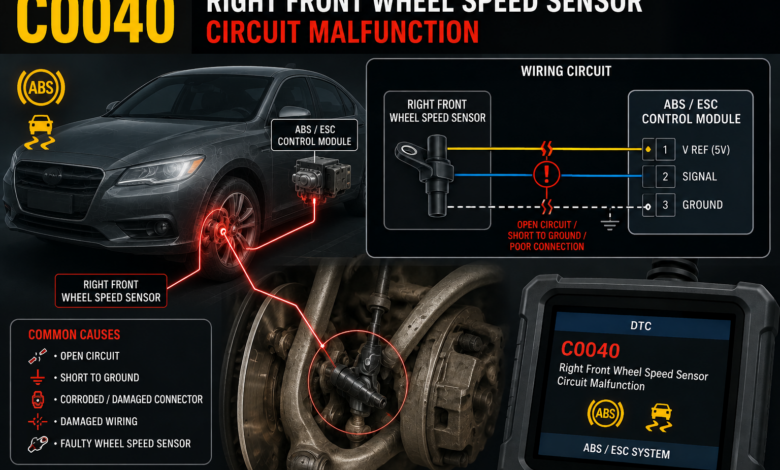
The C0040 code is a diagnostic trouble code (DTC) that signifies a malfunction within the right front wheel speed sensor circuit of a vehicle. This specific code is integral to the vehicle’s anti-lock brake system (ABS) and traction control functions. When the C0040 code is triggered, it indicates a potential failure in the sensor or its electrical circuit, thereby prompting the vehicle’s onboard diagnostic system to activate an alert.
Significance of the C0040 Code:
| Aspect | Description |
|---|---|
| Safety Concerns | A malfunctioning wheel speed sensor can significantly impair the effectiveness of the ABS, heightening the risk of skidding or loss of control during adverse driving conditions. |
| Impact on Performance | The vehicle may exhibit erratic behavior, including inconsistent braking performance and traction loss, which can lead to unpredictable handling characteristics. |
| Diagnostic Insight | The C0040 code serves as a crucial diagnostic indicator for automotive professionals, aiding in pinpointing issues related to speed measurement and stability control. |
| Repair Implications | Prompt attention to this code is essential; failure to address it could result in extensive damage to the braking system, leading to costly repairs and potential safety hazards. |
The importance of understanding the C0040 code extends beyond mere identification of a technical issue; it encapsulates a wide array of safety and performance implications. Routine diagnostic assessments are pivotal for ensuring vehicle reliability and preventing malfunctions that could compromise both safety and functionality. Thus, awareness and proactive management of the C0040 code can foster informed decisions about necessary repairs and maintenance strategies.
The Mechanism of the Right Front Wheel Speed Sensor
The right front wheel speed sensor plays a critical role in modern automotive systems, functioning primarily within the anti-lock braking system (ABS) and traction control mechanisms. This sensor’s operation hinges on its ability to accurately measure the rotational speed of the wheel. By doing so, it provides essential data to the vehicle’s onboard computer, enabling real-time adjustments to braking force and ensuring optimal vehicle stability during dynamic driving conditions.
Operational Dynamics:
Typically, the right front wheel speed sensor employs a Hall effect or inductive sensing technology to produce a voltage signal proportional to wheel speed. This signal is transmitted to the vehicle’s Engine Control Unit (ECU), which processes the information to discern differential speeds between wheels. Such functionality directly influences the activation of ABS features during hard braking, preventing wheel lockup and maintaining steering control.
Key Functionality:
| Function | Description |
|---|---|
| Speed Measurement | Tracks the wheel’s rotational speed and sends data to the ECU. |
| Wheel Slip Detection | Identifies discrepancies between wheel speeds for ABS activation. |
| Data Integration | Integrates with vehicle stability control systems for enhanced safety. |
Significance of Performance:
A properly functioning right front wheel speed sensor is indispensable for maintaining vehicle safety. A malfunction, indicated by the C0040 code, can lead to compromised vehicle dynamics and uncontrolled braking scenarios. Thus, comprehending this sensor’s mechanism is vital for diagnosing issues and ensuring safe driving conditions.
Common Causes of C0040 Code Activation
The activation of the C0040 code typically signifies a disruption within the Right Front Wheel Speed Sensor circuit. Understanding the myriad factors that contribute to this malfunction is crucial for the timely and effective diagnosis and repair of the underlying issue.
Wiring Issues: One of the primary culprits is damaged or corroded wiring within the sensor circuit. Exposure to harsh environmental conditions can lead to the deterioration of insulation, allowing moisture and contaminants to infiltrate the wiring harness. This degradation may result in intermittent disconnections, thus producing erroneous sensor readings.
Sensor Failure: Another prevalent cause relates to sensor failure itself. Over time, the sensor may wear out due to the physical stress exerted by road conditions or impacts from debris. This degradation can result in inaccurate signals being sent to the vehicle’s anti-lock braking system (ABS), leading to the illumination of the C0040 code.
Connector Problems: Faulty or loose connectors can also contribute significantly to circuit malfunctions. If the electrical connections between the sensor and the ABS module are compromised, the system may be unable to read wheel speed effectively.
Interference from Other Systems: Additionally, electromagnetic interference from adjacent vehicle systems can disrupt the signaling process, further complicating the detection of wheel speed. Consequently, meticulous examination of both the sensor and the related electrical systems is paramount during the diagnostic process.
| Cause | Description | Impact on Vehicle |
|---|---|---|
| Wiring Issues | Corroded or damaged wires affecting signal transmission | Erroneous ABS function |
| Sensor Failure | Wear and tear leading to inaccurate speed readings | Inability to engage ABS |
| Connector Problems | Loose or faulty connections disrupting signal flow | Potential loss of braking control |
| Interference from Systems | Electromagnetic disruption from other vehicle components | Decreased system reliability |
Given the variety of potential causes for the C0040 code, thorough diagnostic evaluation and careful inspection of all related components are essential for efficient resolution.
Diagnostic Methods for Identifying C0040 Errors
Diagnosing the C0040 code requires systematic approaches leveraging advanced automotive diagnostic techniques and tools. In the context of vehicular systems, precise fault identification is paramount: omitted errors can lead to extensive mechanical failures or safety hazards. This analysis elucidates several key diagnostic methods that professionals employ to identify the C0040 code.
1. On-Board Diagnostics (OBD-II) Scanner
Utilizing an OBD-II scanner serves as the fundamental first step in diagnosing the C0040 issue. This device not only retrieves the C0040 code but also gathers additional diagnostic trouble codes (DTCs) that may provide insights into underlying issues.
2. Visual Inspection
A thorough visual inspection of the right front wheel speed sensor and associated wiring is essential. Professionals look for signs of wear, corrosion, disconnections, and damage that could affect functionality.
3. Voltage and Signal Testing
Employing a multimeter aids in testing the voltage supply and signal output of the wheel speed sensor. Proper specifications often exist in manufacturer manuals; comparisons with actual readings can substantiate the diagnosis.
4. Road Test Analysis
Conducting a controlled road test allows the technician to observe real-time data regarding wheel speed variations. By cross-referencing wheel speeds during acceleration and deceleration, discrepancies may reveal sensor irregularities.
| Diagnostic Method | Description |
|---|---|
| OBD-II Scanner | Retrieves the C0040 code along with other DTCs to provide a comprehensive overview of potential vehicle issues. |
| Visual Inspection | Identifies physical defects in wiring, sensors, and connectors that could lead to circuit malfunctions. |
| Voltage and Signal Testing | Measures electrical outputs to ensure they meet specified manufacturer standards, affirming sensor effectiveness. |
| Road Test Analysis | Evaluates sensor performance under real-world conditions; a disconnect between actual wheel speeds can directly indicate sensor malfunction. |
In essence, a multifaceted approach is crucial for accurate diagnosis of the C0040 code. Through methodical assessments that include technology-based solutions and hands-on inspections, technicians can effectively mitigate risks associated with malfunctioning wheel speed sensors.
Implications of a Malfunctioning Right Front Wheel Speed Sensor
The malfunction of the right front wheel speed sensor, denoted by the C0040 code, is not merely a technical inconvenience but a pivotal concern with extensive repercussions on vehicular safety and functionality. Understanding these implications is crucial for vehicle owners and technicians alike.
1. Compromised Safety:
A defective wheel speed sensor can significantly impair the vehicle’s anti-lock braking system (ABS). Without accurate data from the sensor, the ABS may fail to function optimally, increasing the likelihood of brake lockup during emergency maneuvers, which can result in accidents.
2. Deterioration of Traction Control:
A non-operational sensor severely affects the traction control system (TCS). This malfunction leads to a failure in monitoring wheel slip, heightening the risk of loss of control under adverse driving conditions, such as rain or snow.
| Implications | Description |
|---|---|
| Compromised Safety | Impaired ABS functionality leading to decreased stopping power and increased accident risk. |
| Deterioration of Traction Control | Failure in monitoring wheel slip risks loss of control in challenging driving conditions. |
| Increased Wear on Components | Malfunctions may lead to uneven tire wear and increased strain on transmission components. |
| Diagnostic Complications | Presence of the C0040 code complicates the diagnostic process, potentially leading to misdiagnosis of more severe issues. |
3. Increased Wear on Components:
The absence of precise speed data may lead vehicles to function inefficiently, resulting in uneven tire wear and causing undue stress on transmission components. This scenario can precipitate larger and costlier repairs over time.
4. Diagnostic Complications:
The C0040 code can obfuscate true vehicle diagnostics, as the symptoms may mimic other system failures. Such confusion may delay the identification of underlying mechanical issues, complicating timely repairs.
In essence, the implications of a malfunctioning right front wheel speed sensor extend beyond immediate operational issues, underscoring the need for proper maintenance and prompt intervention upon detection of the C0040 code.
Strategies for Resolution and Preventive Maintenance
Addressing the C0040 code effectively necessitates a systematic approach that encompasses both immediate resolution techniques and ongoing preventive maintenance measures. Diagnostics lay the foundation for effective repair; thus, utilizing an OBD-II scanner to retrieve the trouble codes is fundamental. This initial step allows technicians to pinpoint specific issues with the right front wheel speed sensor circuit.
Resolution strategies often involve inspecting the wiring harness and connectors for signs of wear, corrosion, or disconnection. A comprehensive assessment can reveal hidden faults that lead to circuit malfunctions. For example, visual inspections can identify cracked insulation or exposed wiring that might lead to intermittent sensor failure.
Moreover, replacing the right front wheel speed sensor can be a decisive measure, particularly when all other diagnostics yield no definitive cause. Ensuring the new sensor is compatible with the vehicle’s specifications is crucial for optimal performance.
Preventive maintenance entails regular checks and an adherence to manufacturer-recommended service intervals. Conducting routine inspections of wheel speed sensors and cleaning their connectors can significantly mitigate the risks associated with circuit failures. The implementation of a proactive maintenance schedule may involve:
| Maintenance Activity | Frequency | Purpose |
|---|---|---|
| Visual Sensor Inspection | Every 6 months | To identify signs of wear or damage |
| Wiring Harness Check | Every oil change | To ensure connections remain secure |
| Sensor Calibration | Annually | To guarantee accurate readings |
By integrating these strategies, not only can one effectively address the C0040 code, but one can also prolong the lifespan of the right front wheel speed sensor, ultimately enhancing vehicle safety and performance. Regular monitoring and maintenance form an indispensable aspect of vehicle ownership, ensuring reliable operation while potentially saving on costly repairs in the future.
Frequently Asked Questions
What are the symptoms of a malfunctioning right front wheel speed sensor?
A malfunctioning right front wheel speed sensor may manifest through a series of discernible symptoms that can significantly impede vehicular performance. Common symptoms include the activation of the anti-lock braking system (ABS) warning light on the dashboard, erratic speedometer readings, and inconsistent traction control behavior, particularly during adverse weather conditions. Additionally, drivers may experience compromised braking efficiency and extended stopping distances, elevating the risk of accidents. Hence, timely diagnosis and rectification are imperative to restore optimal functionality.
How can I diagnose an issue with the right front wheel speed sensor?
Diagnosing an issue with the right front wheel speed sensor necessitates a methodological approach employing both observational and technical diagnostic techniques. Initially, a visual inspection should be conducted to assess the integrity of the wiring harness and connection points, ensuring no signs of fraying or disconnection are present. Subsequently, utilizing an advanced scan tool, the vehicle’s onboard diagnostics (OBD) can be interrogated to retrieve any fault codes related to the ABS or traction control system, which may indicate sensor failures or anomalies. Finally, using a multimeter or oscilloscope to measure the sensor’s output voltage can provide quantifiable data that corroborates the presence of a malfunction.
What are the potential causes of a right front wheel speed sensor circuit malfunction?
The genesis of a right front wheel speed sensor circuit malfunction may be attributed to a variety of etiological factors. One common cause is physical damage stemming from road debris or corrosion, which can compromise both the sensor and the wiring harness. Additionally, issues such as electrical shorts within the circuit or improper installations can contribute to malfunction. Environmental factors, including exposure to moisture and road salts, may also corrode connections, thereby impairing sensor functionality. Collectively, these variables underscore the necessity for regular maintenance and inspection of the vehicle’s brake system components.
Is it safe to drive with a malfunctioning right front wheel speed sensor?
Driving with a malfunctioning right front wheel speed sensor is inadvisable and poses significant safety risks. The sensor plays a critical role in the vehicle’s ABS and traction control systems, which are instrumental in maintaining vehicle stability and preventing skidding during sudden braking or adverse driving conditions. A compromised sensor can lead to unpredictable vehicle handling and increased stopping distances, heightening the risk of collisions. As such, it is imperative for vehicle operators to address sensor malfunctions without delay, prioritizing safety and compliance with automotive regulations.