P0331 Code: Knock Sensor 2 Circuit Range/Performance Bank 2
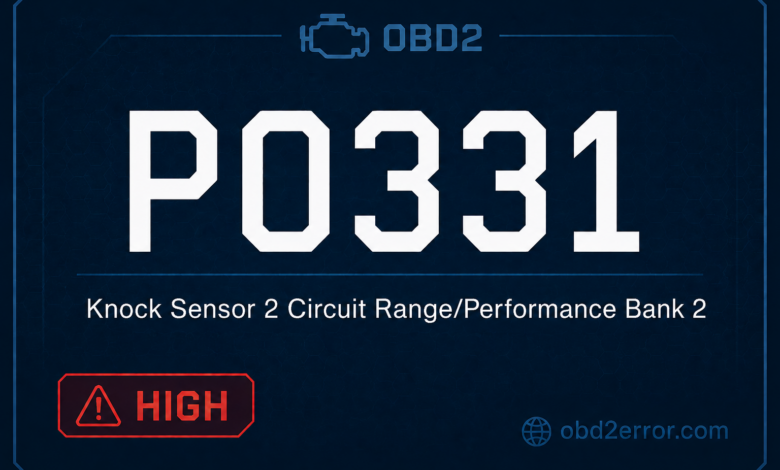
The P0331 code means your engine control module has detected that the knock sensor 2 circuit on bank 2 is producing a signal — but that signal is outside the expected performance range. This is different from the P0330 code, which flags a complete circuit malfunction. With P0331, the sensor is alive and sending data, but the data doesn’t fall within the window the ECM needs for reliable knock detection.
When the P0331 code is stored, the ECM can’t trust the bank 2 knock sensor data. It defaults to conservative ignition timing to protect the engine from undetected detonation — which means reduced power and worse fuel economy until the fault is resolved. The car still drives, but bank 2 is running without proper knock protection.
Range and performance codes like P0331 are among the trickier faults to diagnose because the component isn’t completely dead — it’s partially working. That partial function makes the fault harder to reproduce and confirm than a clean failure like P0330.
What You’ll Notice
- Check engine light on
- Reduced power, especially under load
- Noticeably worse fuel economy
- Engine feels flat during acceleration
- Possible pinging under heavy throttle with lower octane fuel
- Symptoms may be intermittent — worse at certain temperatures or load conditions
- No stalling or rough idle in most cases
The intermittent nature of symptoms associated with this code is one of its defining characteristics. Because the signal is out of range rather than completely absent, there may be moments when the bank 2 sensor performs adequately. This makes P0331 harder to catch during a test drive than a complete failure P0331 Code.
Bank 2 — Which Side?
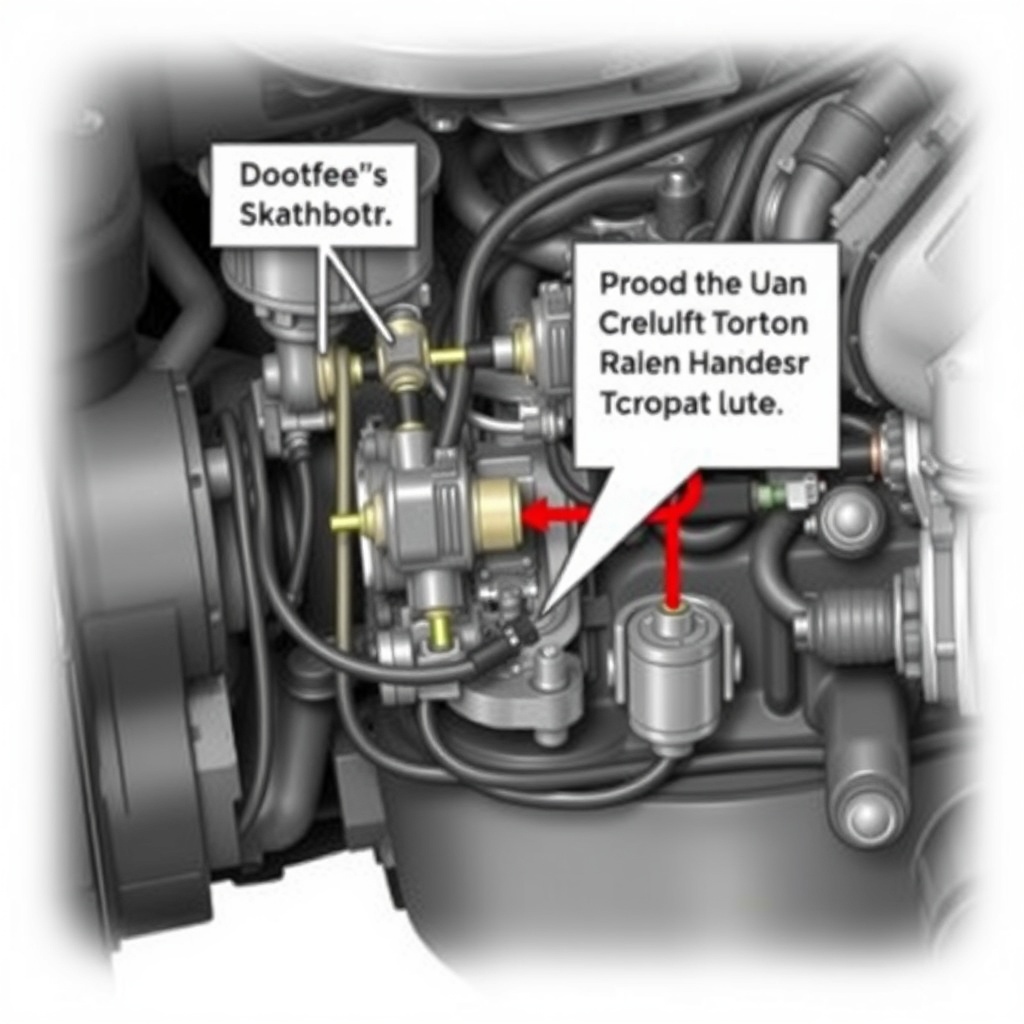
The P0331 code targets bank 2 — the side of the engine that does not contain cylinder 1. On most vehicles bank 2 is the passenger side, but this varies by manufacturer. Always confirm in your service manual before beginning diagnosis.
On inline engines with two knock sensors, the P0331 code refers to the second sensor rather than a separate bank. Most inline 4-cylinder engines only have one knock sensor and won’t produce this code — it’s primarily seen on V6, V8, and inline 6 engines.
What Usually Causes the P0331 Code
1. Degrading knock sensor on bank 2 The most common cause. A sensor in the early stages of failure produces a signal that’s inconsistent or outside normal parameters — not completely dead, but not reliable either. The P0331 code is often the early warning that precedes a full P0330 failure. This degradation is particularly common on high-mileage engines and vehicles that have experienced overheating.
2. Incorrect sensor torque A knock sensor not torqued to specification — typically 15–20 Nm — doesn’t maintain proper contact with the engine block. Without solid metal-to-metal contact, the bank 2 sensor produces an erratic or weak signal that falls outside the ECM’s expected range, triggering the P0331 code. Always check torque before replacing any components — it’s the cheapest possible fix.
3. Degraded wiring or connector Partially damaged wiring introduces variable resistance into the bank 2 circuit. This variable resistance changes the signal in ways that fall outside the ECM’s expected range. On Toyota and Nissan V6 engines, the bank 2 wiring runs under the intake manifold where heat degradation is a well-documented cause of this fault.
4. Excessive engine mechanical noise Worn bearings, a stretched timing chain, or failing accessory components generate vibrations in the frequency range the knock sensor monitors. When mechanical noise is significant enough, the bank 2 sensor picks it up and produces an elevated signal — triggering P0331 even though the sensor itself is working correctly. In this case, the code is a symptom of a mechanical problem rather than an electrical fault. P0331 Code.
5. Carbon buildup Heavy carbon deposits in bank 2 combustion chambers create hot spots that promote pre-ignition and increase genuine knock frequency. The elevated sensor activity registers as out-of-range and contributes to the P0331 code. A fuel system clean addresses this directly.
6. Wrong fuel octane Consistently using lower octane fuel than specified increases knock frequency. On bank 2, elevated knock activity can push the sensor signal outside the normal range and trigger this fault. Always use the minimum octane rating in your owner’s manual.
7. Electromagnetic interference A failing alternator producing AC ripple, or poorly installed aftermarket electronics, can corrupt the bank 2 knock sensor signal. P0331 from interference typically appears alongside other intermittent electrical faults rather than in isolation.
How Serious Is the P0331 Code?
Serious — though its intermittent nature makes it easy to underestimate.
Bank 2 has no reliable knock protection while this fault is active. The ECM’s conservative timing provides some safety margin, but it’s not a substitute for a working sensor. A sensor producing an out-of-range signal today is one that’s failing progressively — addressing P0331 now is almost always cheaper than waiting for it to become a full P0330 code with potential engine damage.
How to Diagnose the P0331 Code
Step 1 — Read all stored codes and freeze frame data
Confirm P0331 and look for companion codes. The P0326 code alongside P0331 means both banks have range issues — pointing toward a shared cause. The P0330 code alongside P0331 means bank 2 has both a circuit fault and a range issue. The freeze frame data tells you the exact conditions when the fault was detected — use this to reproduce it. P0331 Code.
Step 2 — Check sensor torque
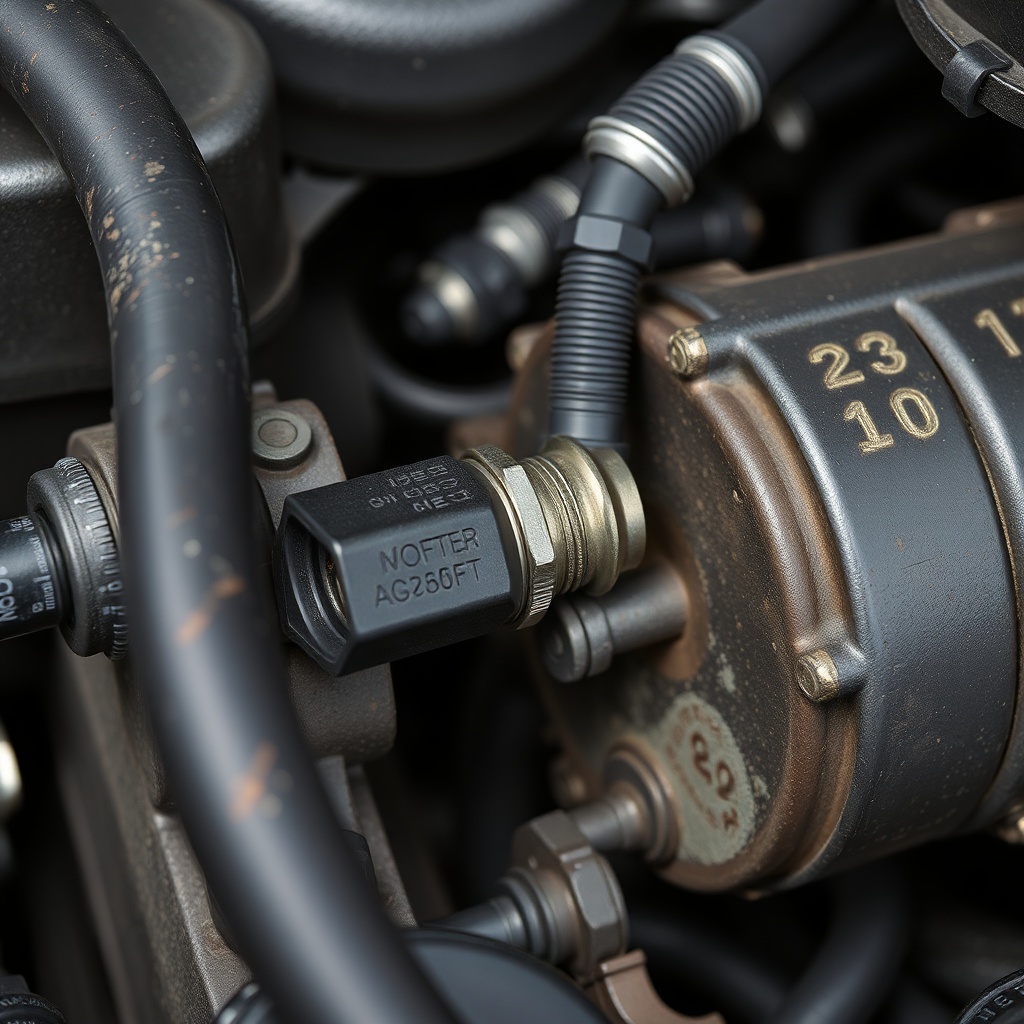
Locate the bank 2 knock sensor and verify it’s properly secured. A sensor that can be moved by hand is undertorqued. Retorque to specification, clear the code, and test drive. If P0331 doesn’t return, undertorque was the cause.
Step 3 — Inspect the sensor and connector
Inspect the bank 2 sensor body for cracks or damage and the connector for corrosion, moisture, and properly seated pins. Look for oil or coolant contamination near the sensor mount. Clean any corrosion with electrical contact cleaner and reconnect firmly. P0331 Code
Step 4 — Listen for mechanical noise
Before electrical testing, listen to the engine with a stethoscope. Focus on the bank 2 side — check for bearing knock, timing chain rattle, or accessory drive noise. A mechanical noise source generating false knock signals needs to be addressed at the source. Replacing the sensor won’t fix the P0331 code if mechanical noise is the real cause.
Step 5 — Monitor live data
Use a scan tool to graph knock sensor data during a road test. Compare the bank 2 signal to bank 1 under the same conditions. An erratic bank 2 signal that doesn’t correspond to actual engine conditions confirms P0331 at the sensor or wiring level.
Step 6 — Oscilloscope test
An oscilloscope connected to the bank 2 signal wire gives you the most complete picture. A degrading sensor shows a noisy, inconsistent waveform. Mechanical noise shows structured rhythmic spikes. EMI shows random high-frequency noise. The waveform guides you to the right repair.
Step 7 — Test sensor resistance
Disconnect the bank 2 sensor and measure resistance across the terminals. Compare to specification for your sensor type. A reading outside specification confirms the bank 2 sensor has failed.
Step 8 — Check the alternator
If P0331 appears alongside other intermittent sensor codes, test the alternator for AC ripple. More than 0.5V AC across the battery terminals with the engine running indicates a failing diode.
How to Fix the P0331 Code
Retorque the bank 2 sensor — Always first. Free and fast. Use a torque wrench and confirm the correct specification.
Replace the bank 2 knock sensor — If the sensor is confirmed degrading and torque and wiring are correct, replace it with an OEM or quality aftermarket unit. Cheap sensors are a recurring cause of this fault returning after replacement.
Repair wiring and connectors — Damaged wiring needs proper repair with automotive-grade materials. On Toyota and Nissan V6 engines, replacing the full updated harness kit addresses the root cause permanently.
Fix engine mechanical noise — If mechanical noise is triggering the fault, repair the noise source. A timing chain tensioner, worn bearings, or loose accessories all need attention regardless of the sensor situation.
Carbon cleaning service — If carbon buildup is contributing to knock events, a fuel system clean or walnut blasting service reduces knock frequency and can resolve the P0331 code from this cause.
Replace the alternator — If AC ripple is the cause, a new alternator resolves it without touching the knock sensor system.
P0331 on Specific Vehicle Makes
Toyota and Lexus V6 (1MZ-FE, 2GR-FE, 3GR-FSE): This code is extremely common on these engines alongside P0326 on bank 1. The under-intake wiring harness degrades on both banks simultaneously. Toyota’s updated harness kit covers both banks — replacing both sensors and the full harness in one visit is the most cost-effective approach.
Nissan VQ V6 (Altima, Maxima, 350Z, 370Z, Pathfinder): Identical failure pattern to Toyota. The P0331 code on VQ engines almost always involves the under-intake harness. Addressing both banks simultaneously is strongly recommended.
GM LS and LT V8 (Silverado, Tahoe, Camaro): P0331 on LS engines can appear from sensor degradation at high mileage or alongside timing chain noise. Check engine mechanical condition before replacing sensors.
Ford Modular V8 (Mustang, F-150): Usually a sensor replacement. Connector corrosion is a known contributing cause in humid climates.
Subaru EJ and FA engines: Moisture intrusion near the bank 2 sensor is common. Inspect the mounting area carefully for water ingress.
What It Might Cost to Fix the P0331 Code
| Repair | Estimated Cost |
|---|---|
| Sensor retorque (DIY) | Free |
| Bank 2 knock sensor (accessible) | $80 – $250 |
| Bank 2 knock sensor (under intake) | $300 – $700 |
| Both sensors + updated harness (Toyota/Nissan) | $500 – $1,000 |
| Wiring / connector repair | $100 – $400 |
| Carbon cleaning service | $150 – $400 |
| Alternator replacement | $200 – $600 |
| Timing chain repair | $600 – $1,500 |
Costs vary by vehicle. Always get a vehicle-specific estimate.
Related Codes
- P0324 — Knock Control System Error
- P0326 — Knock Sensor 1 Circuit Range/Performance Bank 1
- P0330 — Knock Sensor 2 Circuit Malfunction Bank 2
- P0332 — Knock Sensor 2 Circuit Low Input Bank 2
- P0333 — Knock Sensor 2 Circuit High Input Bank 2
- P0325 — Knock Sensor 1 Circuit Malfunction Bank 1
- P0300 — Random/Multiple Cylinder Misfire Detected
Frequently Asked Questions
Can I drive with the P0331 code? Short trips are possible since the ECM defaults to conservative timing. But bank 2 lacks reliable knock protection. If you hear pinging under acceleration, reduce engine load immediately and get it diagnosed soon.
What’s the difference between P0331 and P0330? The P0330 code flags a complete circuit malfunction — the bank 2 signal is absent or the circuit has a definitive fault. P0331 means the circuit is working but the signal is outside the expected performance range. P0331 is often an early-stage failure that precedes P0330 as the sensor degrades further.
Why does P0331 come back after replacing the bank 2 sensor? Most commonly a wiring fault — especially on Toyota and Nissan V6 engines where the under-intake harness is the real cause. Also verify the replacement sensor part number matches the original exactly.
Should I replace both knock sensors when fixing P0331? On Toyota and Nissan V6 engines — yes. Both sensors are in the same under-intake location and degrade at similar rates. On other engines where sensors are externally accessible, replacing only the failed sensor is reasonable.
Can wrong fuel cause P0331? Low octane fuel increases knock frequency, which can push the bank 2 sensor signal outside the normal range. Refill with the correct octane and clear the code — if P0331 doesn’t return, fuel quality was the contributing factor.
How do I know if P0331 is caused by the sensor or mechanical noise? Listen to the engine before any electrical testing. A healthy-sounding engine points toward a sensor or wiring fault. New knocking or rattling alongside P0331 suggests the sensor is accurately reporting a mechanical problem — fix the noise source before replacing the sensor.
For more information on engine knock and OBD-II standards, visit the National Highway Traffic Safety Administration (NHTSA) or the SAE International standards library.
This guide is for informational purposes only. For an accurate diagnosis, always consult a qualified mechanic.