P0340 Code: Camshaft Position Sensor A Circuit Malfunction
The P0340 code means your engine control module has detected a fault in the camshaft position sensor A circuit. When the P0340 code is stored, the ECM is either receiving no signal from the camshaft position sensor, or the signal it’s receiving is so abnormal that it can’t be used for engine management.
The camshaft position sensor is one of the most critical inputs the ECM relies on. It works alongside the crankshaft position sensor — covered in the P0335 code and P0336 code — to give the ECM a complete picture of where the engine is in its combustion cycle at any given moment. The crankshaft sensor tells the ECM how fast the engine is spinning and where the pistons are. The camshaft sensor confirms which cylinder is on its compression stroke and ready to fire.
Without that confirmation, the ECM can’t determine which cylinder to inject fuel into or when to fire the spark. The result of a P0340 code ranges from rough running and hard starting to a complete no-start condition — depending on how severely the signal has been disrupted.
What You’ll Notice
- Check engine light on
- Engine cranks but won’t start, or starts and immediately stalls
- Hard starting — takes longer than usual to fire up
- Rough idle once the engine does start
- Intermittent stalling, particularly at low speed or idle
- Random misfires with no consistent pattern
- Reduced power and hesitation during acceleration
- Tachometer reading zero or behaving erratically while cranking
The P0340 code is one of those faults that can produce dramatically different symptoms depending on the vehicle and the severity of the signal loss. On some vehicles, a partial signal loss causes rough running but the engine keeps going. On others, a complete signal absence means the engine won’t start at all — the ECM simply can’t run the sequential fuel injection system without knowing which cylinder is ready to fire.
Camshaft Position Sensor A — What Does “A” Mean?
The “A” in the P0340 code refers to the intake camshaft on bank 1 — or on engines with a single camshaft, the camshaft itself. On engines with variable valve timing systems that operate both intake and exhaust camshafts independently, there are multiple camshaft position sensors — one per camshaft. The P0340 code specifically targets the intake camshaft sensor on bank 1.
If your engine has two banks (V6, V8), bank 1 is the side containing cylinder 1. On inline engines there’s only one bank, so the P0340 code refers to the sole camshaft position sensor or the intake cam sensor on engines with dual overhead cams.
How the Camshaft Position Sensor Works
The camshaft position sensor reads a reluctor wheel — a toothed ring or notched disc — on the camshaft. As the camshaft rotates, the teeth or notches pass the sensor and generate a pulse signal. The ECM reads this signal and uses it to identify which cylinder is on its compression stroke.
On modern engines with variable valve timing (VVT), the camshaft position sensor does an additional job. The ECM monitors the relationship between the crankshaft position signal and the camshaft position signal in real time. If VVT is advancing or retarding the camshaft, the ECM can see how far it’s moved by comparing the two signals. When the P0340 code disrupts this comparison, VVT control is also lost.
According to SAE J1979 OBD-II standards, the P0340 code is stored when the ECM detects that the camshaft position sensor A circuit on bank 1 is not producing a valid signal during engine cranking or operation.
What Usually Causes the P0340 Code
1. Faulty camshaft position sensor The most common cause of the P0340 code. The sensor itself has failed — either completely or intermittently. Camshaft position sensors are exposed to engine heat and oil vapor throughout their life, and the internal components degrade over time. A sensor that’s failing thermally may work when cold but produce an invalid signal once the engine reaches operating temperature — a pattern that produces intermittent P0340 symptoms that appear after warmup and clear after cooling down.
2. Damaged wiring or connector The wiring harness connecting the camshaft position sensor to the ECM can develop a short, an open circuit, or high resistance from heat damage, oil contamination, or vibration. The P0340 code from a wiring fault is particularly common on engines where the cam sensor wiring runs close to the valve cover — a hot, oil-exposed environment. A corroded or partially unseated connector produces an intermittent P0340 code that’s difficult to catch during a static test.
3. Reluctor wheel damage The reluctor wheel on the camshaft — or the tone ring on the cam gear — can crack, lose teeth, or accumulate metallic debris from engine wear. A damaged reluctor wheel produces an irregular signal pattern that the ECM can’t interpret, storing the P0340 code. This cause is less common than sensor or wiring failure, but it does occur — particularly on engines that have experienced timing system issues or severe oil starvation.
4. Timing chain or belt issues On engines with variable valve timing, the relationship between the crankshaft and camshaft signals must fall within specific parameters. A stretched timing chain, a worn timing chain tensioner, or a slipped timing belt changes this relationship enough that the ECM can no longer correlate the cam and crank signals correctly — storing the P0340 code even though the camshaft sensor itself is working perfectly. This is an important cause to rule out because replacing the sensor won’t fix it.
5. Oil pressure issues affecting VVT On VVT-equipped engines, the camshaft position is controlled hydraulically by engine oil pressure acting on the VVT actuator (cam phaser). Low oil pressure, oil that’s too thick or too thin, or a blocked oil passage to the VVT actuator can cause the camshaft to be in the wrong position — producing a signal that doesn’t match what the ECM expects and storing the P0340 code. This is why the P0340 code sometimes appears alongside VVT-related codes.
6. Incorrect sensor installation If the P0340 code appeared after recent engine work — a timing belt service, head gasket replacement, or valve cover gasket job — incorrect sensor installation is a likely cause. A sensor that isn’t fully seated, incorrectly gapped, or installed in the wrong position produces an invalid signal. On some engines, the camshaft position sensor has a specific air gap requirement that must be met for reliable operation.
7. Failed crankshaft position sensor This is a less obvious cause of the P0340 code but worth understanding. On some ECM strategies, the cam and crank signals are cross-referenced for validation. If the crankshaft position sensor — covered in the P0335 code — fails completely, the ECM may store both P0335 and P0340 because it can no longer validate either signal. If both codes appear together, start with the crankshaft sensor before assuming the cam sensor has also failed.
8. ECM fault Rare, but a fault in the ECM’s camshaft signal processing circuit can produce the P0340 code without any physical problem in the sensor, wiring, or reluctor wheel. This should only be considered after all external causes have been systematically eliminated.
How Serious Is the P0340 Code?
Very serious — particularly if the engine won’t start or is stalling.
The camshaft position signal is fundamental to sequential fuel injection and ignition timing. Without it, the ECM either can’t run the engine at all or runs it in a degraded mode that produces misfires, rough running, and poor performance. A vehicle that stalls unexpectedly at speed is a genuine safety risk.
Beyond the immediate drivability impact, the P0340 code on VVT-equipped engines means variable valve timing is also offline. Running without VVT control for extended periods isn’t ideal for engine longevity — VVT affects oil consumption, fuel economy, and emissions as well as performance.
Address the P0340 code promptly. The diagnosis is usually straightforward and the most common fix — sensor replacement — is not expensive.
How to Diagnose the P0340 Code
Step 1 — Read all stored codes and freeze frame data
Confirm the P0340 code and check for companion codes. The P0335 code or P0336 code alongside P0340 means both cam and crank signals are affected — pointing toward a power supply, wiring, or timing system issue rather than an isolated cam sensor failure. VVT-related codes like P0011 or P0012 alongside P0340 suggest oil pressure or timing chain issues. The freeze frame data tells you the exact conditions when the P0340 code was stored.
Step 2 — Check the sensor and connector
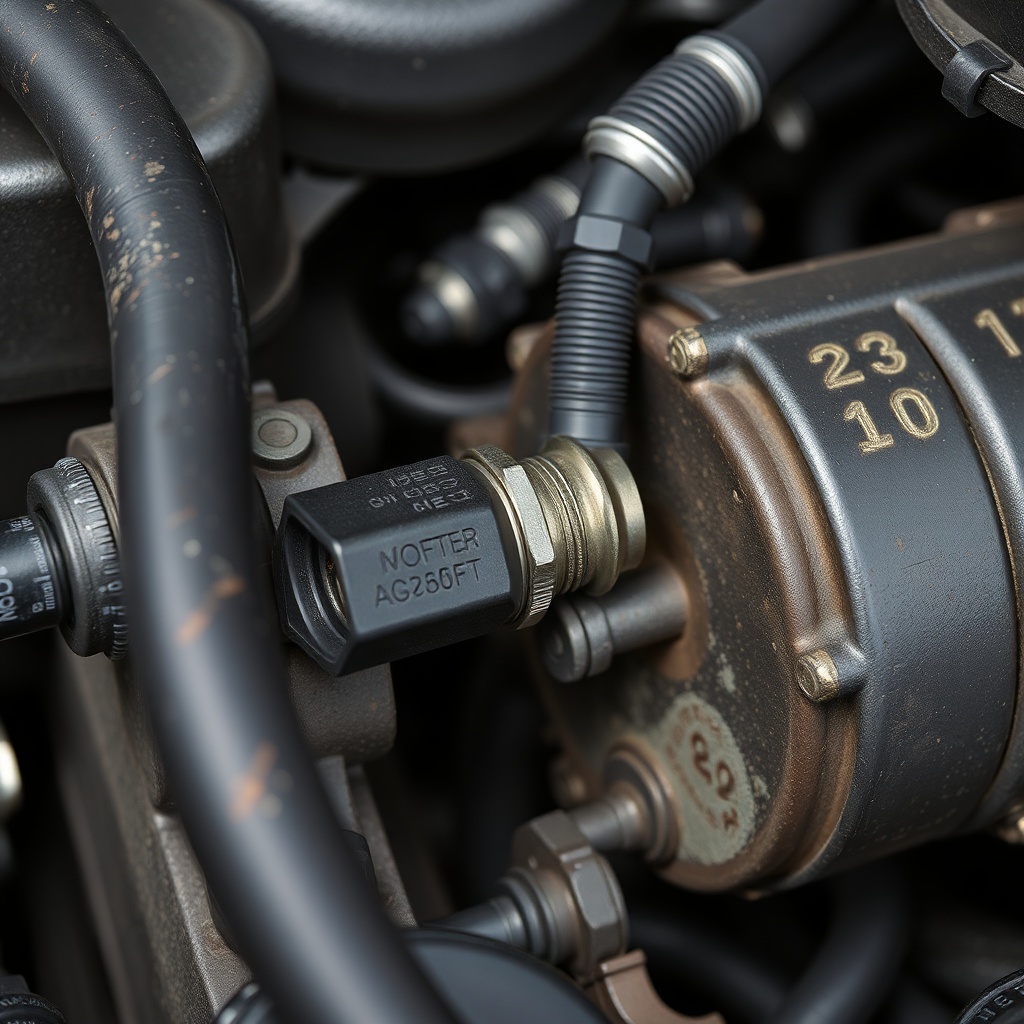
Locate the camshaft position sensor — typically mounted on the cylinder head or valve cover, near the camshaft. Inspect the sensor body for cracks, damage, or oil contamination. Disconnect the connector and inspect the terminals for corrosion, moisture, and properly seated pins. Clean any corrosion with electrical contact cleaner and reconnect firmly. Clear the P0340 code and test drive before going further.
Step 3 — Check for oil leaks near the sensor
Oil contamination of the camshaft position sensor or its connector is a common cause of P0340. Check for oil leaks from the valve cover gasket or cam seal near the sensor location. A sensor soaked in engine oil will eventually fail — replacing it without fixing the leak means the new sensor fails the same way.
Step 4 — Test the sensor signal
Connect an oscilloscope to the camshaft position sensor signal wire with the sensor connected. Crank or run the engine and observe the waveform. A healthy camshaft position sensor produces a clean, consistent pattern of pulses that correspond to the cam reluctor wheel. A P0340 fault shows a waveform that’s absent, erratic, or significantly lower amplitude than expected.
Step 5 — Test sensor power and ground
The camshaft position sensor requires a reference voltage — typically 5V — and a ground connection. With the sensor connected and the ignition on, measure voltage between the reference wire and the ground wire at the sensor connector. No reference voltage points to a wiring fault or ECM issue upstream of the sensor. No ground means the circuit ground has failed.
Step 6 — Check wiring continuity
Disconnect both the sensor connector and the ECM connector. Test continuity on each wire between the two connectors. Any wire showing no continuity has a break. Check for shorts to ground — the signal wire should not show continuity to the vehicle chassis.
Step 7 — Check the timing system
If the sensor, wiring, and connector all test fine but the P0340 code persists, check the timing chain or belt condition. A stretched timing chain changes the cam-to-crank relationship and can store P0340. If the engine has high mileage or a history of infrequent oil changes, timing chain wear is a realistic suspect. A mechanic can assess timing chain condition by comparing the cam and crank signals with an oscilloscope and checking for excessive slack in the chain.
Step 8 — Check oil condition and pressure
On VVT-equipped engines, check the engine oil level, condition, and pressure. Dark, sludgy oil blocks the oil passages to the VVT actuator and causes camshaft position errors that store the P0340 code. A fresh oil change with the correct viscosity oil sometimes resolves P0340 on VVT engines with oil-related cam phaser issues.
How to Fix the P0340 Code
Replace the camshaft position sensor — The most common fix for P0340. The sensor is typically accessible without major disassembly and is inexpensive on most vehicles. After replacement, clear the P0340 code and perform a proper drive cycle to confirm the repair.
Repair wiring and connectors — If damaged wiring or a corroded connector is causing the P0340 code, repair it properly with automotive-grade materials. On engines where the cam sensor wiring runs near the valve cover, securing the harness away from heat and oil is important to prevent recurrence.
Fix oil leaks — If oil contamination caused the sensor or connector to fail, fix the valve cover gasket or cam seal before replacing the sensor. Fitting a new sensor into an oily environment just repeats the failure.
Replace the timing chain or belt — If timing chain stretch or a slipped belt is causing the cam-to-crank correlation error that stores P0340, the timing system needs repair. This is a more significant job that should be done by a qualified mechanic.
Address VVT oil pressure issues — If low oil pressure or sludge is affecting the VVT actuator, an oil change with the correct specification oil is the first step. Persistent oil pressure issues require further investigation of the oil pump, oil passages, and VVT solenoid.
ECM replacement — Only as a last resort after all external causes of the P0340 code have been definitively ruled out.
P0340 on Specific Vehicle Makes
Toyota and Lexus: The P0340 code is common on Toyota and Lexus VVT-i and Dual VVT-i engines. Oil contamination of the cam sensor connector and VVT-related timing issues from sludge buildup are frequent causes. Toyota recommends 0W-20 or 5W-30 oil on most modern engines — using the wrong viscosity can contribute to VVT issues that store P0340.
Honda and Acura: On Honda K-series and J-series engines, the P0340 code is typically a sensor replacement. The cam sensor is externally accessible on most Honda engines. Check for oil leaks from the valve cover gasket — a known weak point on K-series engines that often contaminates the sensor.
Ford: On Ford EcoBoost engines and Modular V8s, P0340 can relate to the cam phaser or VCT (Variable Cam Timing) system. Timing chain wear on high-mileage EcoBoost engines is a known contributor to cam position codes including P0340.
General Motors: On GM LS and LT engines, the P0340 code occasionally appears from sensor failure or wiring damage. The cam sensor on LS engines is located at the front of the engine and is relatively accessible.
Nissan: On Nissan VQ and QR engines, P0340 can relate to the CVTC (Continuously Variable Valve Timing Control) system as well as the sensor itself. Oil condition is particularly important on these engines — sludge buildup causes VVT actuator issues that produce P0340.
What It Might Cost to Fix the P0340 Code
| Repair | Estimated Cost |
|---|---|
| Camshaft position sensor replacement | $80 – $250 |
| Wiring / connector repair | $100 – $400 |
| Valve cover gasket replacement (oil leak) | $150 – $500 |
| Timing chain replacement | $500 – $1,500 |
| VVT solenoid replacement | $100 – $400 |
| Oil change (VVT-related cause) | $50 – $120 |
| ECM replacement | $500 – $1,500+ |
Costs vary by vehicle make, model, and labor rates. Timing chain replacement is the most labor-intensive repair associated with P0340.
Related Codes
- P0335 — Crankshaft Position Sensor A Circuit Malfunction
- P0336 — Crankshaft Position Sensor A Circuit Range/Performance
- P0341 — Camshaft Position Sensor A Circuit Range/Performance Bank 1
- P0342 — Camshaft Position Sensor A Circuit Low Input Bank 1
- P0343 — Camshaft Position Sensor A Circuit High Input Bank 1
- P0011 — Camshaft Position Timing Over-Advanced Bank 1
- P0012 — Camshaft Position Timing Over-Retarded Bank 1
- P0300 — Random/Multiple Cylinder Misfire Detected
Frequently Asked Questions
Can I drive with the P0340 code? If the engine starts and runs, short necessary trips are possible — but the P0340 code means the ECM is running without reliable cam position data, which causes misfires, poor fuel economy, and unpredictable behavior. If the engine is stalling or won’t start reliably, don’t drive it further than necessary. Get the P0340 code diagnosed as soon as possible.
What’s the difference between P0340 and P0335? The P0335 code targets the crankshaft position sensor circuit. The P0340 code targets the camshaft position sensor A circuit. Both sensors work together to manage ignition and fuel timing — which is why both codes produce similar symptoms. If both P0340 and P0335 appear together, start with the crankshaft sensor before assuming both sensors have failed simultaneously.
Can P0340 cause a no-start? Yes — and it’s one of the more common causes of a crank-no-start condition. Without a valid cam signal, the ECM can’t determine which cylinder is on its compression stroke and ready to fire. On sequential injection systems, this prevents the ECM from injecting fuel in the correct sequence — and the engine won’t run.
Could a low oil level cause the P0340 code? On VVT-equipped engines, yes — indirectly. Low oil level leads to low oil pressure, which affects the hydraulic VVT actuator. If the actuator can’t move the camshaft to the correct position, the cam position signal doesn’t match what the ECM expects, and P0340 is stored. Always check oil level when diagnosing P0340 on VVT engines.
How do I know if P0340 is from the sensor or the timing chain? If the sensor, wiring, and connector all test fine but P0340 persists, the timing system is the next suspect. A mechanic with an oscilloscope can compare the cam and crank signal timing to determine whether the camshaft is running in the correct relationship to the crankshaft. Excessive chain slack or a slipped belt changes this relationship measurably.
Why does P0340 sometimes appear after an oil change? If the wrong oil viscosity was used, VVT actuator performance can be affected on engines with tight oil specification requirements. Too thick an oil in cold weather, or too thin an oil on a high-mileage engine, can cause cam positioning errors that store the P0340 code. Use the oil specification listed on the oil cap or in the owner’s manual.
For more information on camshaft position sensors and OBD-II diagnostic standards, visit the National Highway Traffic Safety Administration (NHTSA) or the SAE International standards library.
This guide is for informational purposes only. For an accurate diagnosis, always consult a qualified mechanic.