The Ultimate Diagnostic Masterclass for the P0171 Code: Causes, Symptoms, and Step-by-Step Advanced Repairs
P0171 Code The sudden illumination of the Check Engine Light (CEL) on your vehicle’s instrument cluster is a universal trigger for driver anxiety. Among the hundreds of Diagnostic Trouble Codes (DTCs) standardized by automotive engineers globally, the P0171 code stands out as one of the most pervasive, challenging, and frequently misdiagnosed issues across modern internal combustion engines.
Officially defined across all automotive software platforms as “System Too Lean (Bank 1)”, this diagnostic trouble code indicates a fundamental operational imbalance within the engine’s powertrain ecosystem. In its simplest terms, a P0171 code means that the Powertrain Control Module (PCM) or Engine Control Module (ECM) has detected either an excessive, unmetered volume of atmospheric air entering the combustion chambers, or a critical deficiency in the volume of fuel being delivered to match that air.
Ignoring a persistent lean fault condition is not merely a matter of enduring an annoying amber dashboard light; it is a direct path toward progressive mechanical degradation, severe thermal stress on internal engine components, catalyst poisoning, and catastrophic engine failure. This master-level automotive diagnostic guide will deconstruct the complex chemistry, internal mechanics, closed-loop sensor feedback loops, and root causes behind this notorious trouble code to help you clear it permanently.
1. The Core Engineering and Chemistry Behind the P0171 Code
To truly master the diagnostics of a lean fault code, a technician or car enthusiast must first comprehend the foundational thermodynamic and chemical principles governing internal combustion. For a modern spark-ignition gasoline engine to operate at peak thermal efficiency, achieve complete chemical energy conversion, and minimize toxic tailpipe emissions, it must maintain a highly precise chemical balance known as the stoichiometric ratio.
The Stoichiometric Standard
For standard, unleaded pump gasoline, the stoichiometric air-fuel ratio is mathematically defined as exactly 14.7:1 by weight. This signifies that for every 1 gram of fuel injected into the combustion chamber, exactly 14.7 grams of ambient atmospheric air must be drawn in to achieve a chemically perfect burn. At this exact ratio, all available hydrocarbons (\(HC\)) in the fuel react perfectly with all available oxygen (\(O_{2}\)) in the air, leaving behind theoretically benign outputs of carbon dioxide (\(CO_{2}\)), water vapor (\(H_{2}O\)), and atmospheric nitrogen (\(N_{2}\)).
- Rich Mixture: If the air-fuel ratio drops below 14.7:1 (e.g., 11.5:1), the mixture is considered “rich.” There is too much fuel or an insufficient amount of oxygen. This results in incomplete combustion, high hydrocarbon emissions (unburned raw fuel), black smoke, and poor fuel economy.
- Lean Mixture: If the air-fuel ratio rises significantly above 14.7:1 (e.g., 17.2:1), the mixture is classified as “lean.” There is an excess of unburned oxygen or a distinct lack of physical fuel. Lean mixtures burn much hotter than stoichiometric or rich mixtures, creating localized thermal spikes capable of melting spark plug electrodes, burning exhaust valves, cracking pistons, and generating toxic levels of Nitrogen Oxides (\(NO_{x}\)). This is the exact thermal hazard flagged by the P0171 code.
Deciphering the Geometry: What is “Bank 1”?
The addition of the phrase “Bank 1” to the official trouble definition is an architectural indicator designed to point the technician to a specific physical side of the engine layout.
- Inline Configurations (I4, I5, I6 Engines): In standard inline engines, where all cylinders are arranged sequentially in a single vertical or slanted row under one cylinder head, the entire engine is considered a single bank. Therefore, on a 4-cylinder or inline 6-cylinder vehicle, Bank 1 represents the entire engine block. A P0171 code here points to a global system fault affecting the entire air or fuel delivery tract.
- V-Configuration and Boxer Designs (V6, V8, Flat-4, Flat-6): In engines where the cylinders are split into two opposing angled rows (banks), Bank 1 always denotes the bank of cylinders that contains Cylinder Number 1 in the engine’s physical firing order. The opposing cylinder row is designated as Bank 2. If a lean condition is isolated strictly to the secondary bank, the PCM will instead store a P0174 code (System Too Lean – Bank 2). If a vehicle stores both P0171 and P0174 simultaneously, the root cause is almost universally a shared component, such as a main vacuum leak or a failing primary fuel pump.
2. Digital Feedback Loops: How the PCM Triggers a P0171 Code
Modern automotive engine management relies entirely on a continuous, real-time digital system known as Closed-Loop Feedback Control. The PCM acts as an ultra-fast processing hub that constantly references sensors at the air intake against sensors at the exhaust tailpipe to modulate fuel delivery down to fractions of a millisecond.
The Mass Airflow to Oxygen Sensor Nexus
The baseline calculation for fuel delivery begins at the air intake tract. As atmospheric air is sucked into the engine, it passes through the Mass Airflow (MAF) sensor. The MAF sensor translates the mass and density of this moving column of air into a highly sensitive frequency or voltage signal and transmits it instantly to the PCM. The PCM reads this input, references its internal factory-calibrated fuel maps, and commands the Fuel Injectors to open for a precise duration (known as injector pulse width) to match the incoming air at a perfect 14.7:1 ratio.
Once combustion is completed, the resulting exhaust stream rushes through the exhaust manifold and encounters the upstream Oxygen Sensor (\(O_{2}\) Sensor) or Air-Fuel Ratio (AFR) Sensor (designated as Sensor 1). This sensor does not measure the amount of fuel in the exhaust; rather, it measures the residual concentration of unburned oxygen molecules.
- If the exhaust contains almost no oxygen, the sensor sends a high voltage signal (~0.9V), signaling a rich condition.
- If the exhaust contains a massive volume of unburned oxygen, the sensor drops its voltage output significantly (~0.1V) or shifts its current loop, informing the PCM that the mixture is lean, which sets the foundation for the P0171 code.
Short-Term Fuel Trim (STFT) vs. Long-Term Fuel Trim (LTFT)
To handle instantaneous real-world variables—such as elevation changes, humidity shifts, or minor component wear—the PCM utilizes an adaptive calculation called Fuel Trim, broken into two distinct memory registers:
- Short-Term Fuel Trim (STFT): This is an instantaneous, volatile, and highly dynamic correction factor. The STFT values change multiple times per second based on the direct voltage fluctuations of the upstream oxygen sensor. If the \(O_{2}\) sensor signals a lean condition, the STFT immediately shifts into positive percentage numbers (e.g., +3%, +8%, +12%). A positive fuel trim represents the PCM’s command to inject more fuel than the base calibration intended. If the sensor reads rich, STFT shifts into negative percentages to trim fuel away.
- Long-Term Fuel Trim (LTFT): LTFT is a non-volatile, historical map of fuel delivery adjustments. If a mechanical issue (such as a split vacuum line) causes the STFT to stay consistently highly positive over a prolonged period of driving cycles, the PCM recognizes that this is no longer a temporary anomaly. The PCM transfers these high values into the LTFT matrix. For example, if the STFT is constantly hanging at +15%, the LTFT will eventually step up to +15%, and the STFT will reset back down toward 0% to manage immediate changes from that new elevated baseline.
The Threshold of the P0171 Code
The PCM has built-in safety and operational boundaries. It cannot allow fuel trims to expand infinitely, as fuel injectors have mechanical physical limits to how long they can stay open during a single engine cycle.
In the vast majority of standard automotive OBD-II software architectures, the threshold for triggering a fault lamp is reached when the total cumulative sum of Short-Term Fuel Trim and Long-Term Fuel Trim exceeds +20% to +25% for a sustained duration (typically longer than 10 to 30 seconds depending on engine load and RPM parameters).
When the PCM realizes that it is continuously dumping 25% more fuel into the engine than mathematically required by the base map, yet the upstream oxygen sensor stubbornly continues to report excessive, unburned oxygen in the exhaust, the PCM concludes that the system is unmanageable. It locks the engine out of optimal operating parameters, illuminates the Check Engine Light, and records the P0171 code into its diagnostic memory bank along with a snapshot of the engine variables at that exact moment, known as Freeze Frame Data.
3. Physical Symptoms Triggered by the P0171 Code Fault Condition
A lean air-fuel ratio directly compromises the core physics of chemical-to-kinetic energy conversion within the cylinders. While some modern vehicles with highly advanced, adaptive PCMs can mask a minor lean condition to the point where a driver only notices the illuminated dashboard lamp, a true P0171 code condition almost always exhibits clear, physical, and audible behavioral symptoms.
Rough Idle, Oscillating RPMs, and Unprovoked Stalling
At idle, an engine operates at its lowest air volume and lowest fuel volume, making it incredibly sensitive to even the smallest disruptions in the air-fuel matrix. Because a lean mixture lacks chemical density, the flame front across the combustion chamber moves slowly and unevenly. This results in unstable combustion cycles.
A driver will notice the tachometer needle bouncing or hunting up and down, and the vehicle will feel rough, shaking or vibrating excessively while sitting at a stoplight. If the unmetered air volume or fuel starvation driving the P0171 code becomes severe enough, the mixture crosses the threshold of flammability, the engine cannot maintain sufficient idle torque, and it will stall completely out of nowhere.
Severe Engine Hesitation and Acceleration Power Sags
When a driver presses the accelerator pedal to merge onto a highway or climb a hill, the PCM opens the throttle body to allow a massive rush of air into the engine, expecting a simultaneous, high-volume spray of fuel from the injectors. If the fuel delivery system is compromised, the air-fuel ratio spikes violently into the lean zone.
The engine will experience a distinct, sometimes violent delay known as hesitation. The car feels as if it completely hits a wall of dead space for two to three seconds before stumbling upward in speed, or it may exhibit rhythmic sagging throughout the powerband while trying to process the persistent P0171 code parameters.
Lean Misfires and Random Cylinder Stumbling
When a lean mixture fails to ignite cleanly or completely under spark plug actuation, it creates a phenomenon known as a lean misfire. Because the fuel molecules are spread too thinly throughout the cylinder space, the spark cannot bridge a consistent thermal path. Unburned oxygen and raw hydrocarbons are pumped straight out into the exhaust manifold. This often triggers secondary diagnostic trouble codes alongside the primary P0171 code, most notably P0300 (Random/Multiple Cylinder Misfire) or cylinder-specific variants such as P0301, P0302, P0303, or P0304.
The Paradox of Drastically Decreased Fuel Economy
One of the most persistent misconceptions among car owners is that running a lean engine means using less fuel, thereby inadvertently saving money at the pump. In reality, a P0171 code is an absolute destroyer of fuel efficiency due to two direct factors:
- Driver Compensation: Because the engine has lost a significant percentage of its thermodynamic torque due to weak combustion, the driver must physically press the accelerator pedal much deeper and hold gears much longer just to maintain normal, everyday driving speeds.
- PCM Intervention: As detailed in the fuel trim section, the PCM is actively fighting the lean condition by forcing the injectors to dump up to 25% or more fuel into the cylinders via positive fuel trims to prevent catastrophic engine damage. This extra fuel is burned highly inefficiently, causing your vehicle’s fuel economy to plummet significantly.
4. Deciphering the Hidden Root Causes of the P0171 Code
Diagnosing a P0171 code system lean warning requires systematic engineering logic. The code does not point to a single broken part; it merely reports that the final calculation of the system’s performance is dangerously out of balance. The underlying causes can be categorized into distinct physical sectors.
Unmetered Air Infiltration and Engine Vacuum Leaks
A vacuum leak represents any physical point where atmospheric air enters the engine’s combustion tract after the Mass Airflow sensor. Because this air sneaks into the system behind the sensor’s back, it is completely invisible to the PCM’s initial fuel calculations, creating a massive lean offset that triggers the P0171 code.
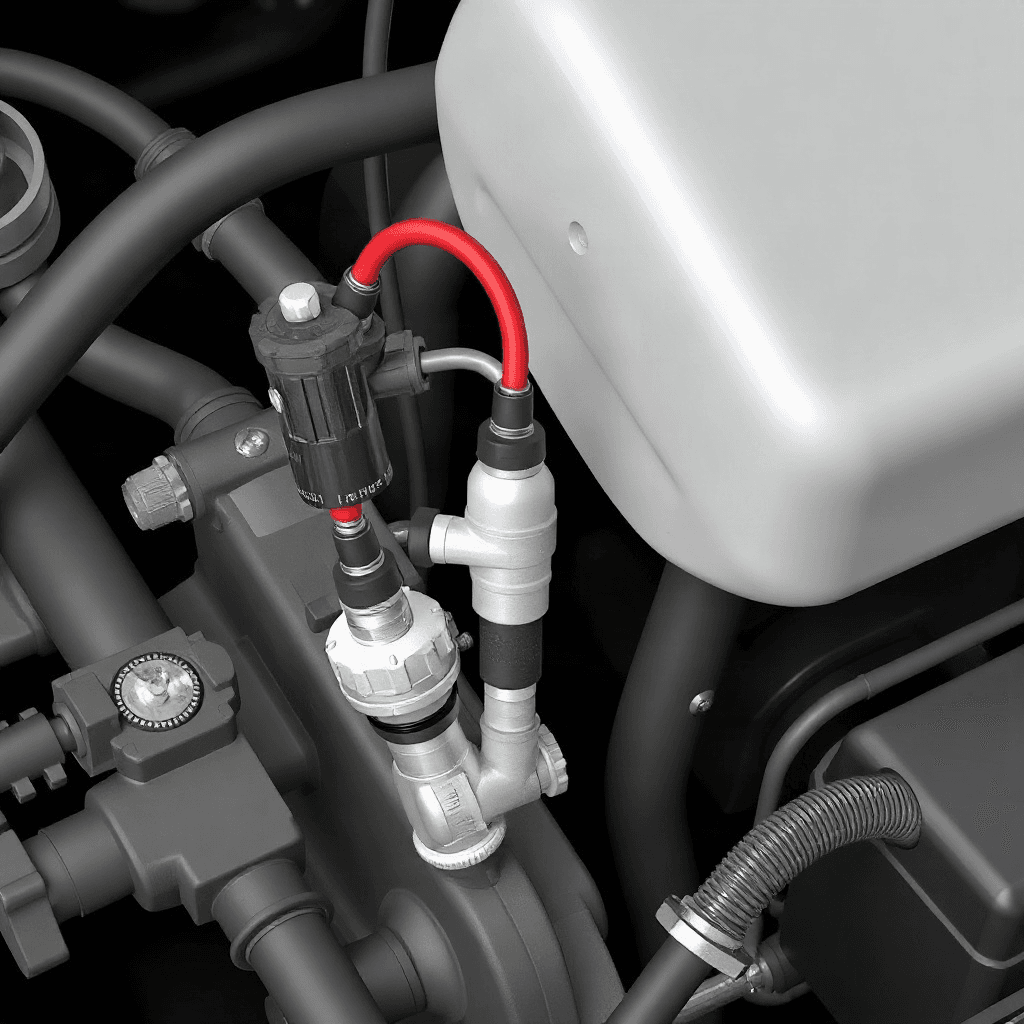
- Perished or Torn Vacuum Hoses: Modern engine bays are subjected to brutal, continuous thermal cycling. Over time, small rubber vacuum lines—such as those controlling the brake booster, four-wheel-drive engagement actuators, or secondary air systems—dry out, harden, and split open. The continuous engine vacuum sucks outside air directly through these cracks.
- Intake Manifold Gaskets: The gaskets that seal the plastic or composite intake manifold to the aluminum cylinder head are a highly frequent failure point. Over time, these gaskets shrink and lose their elasticity. This is especially noticeable during cold winter mornings; the cold shrunk plastic allows air to bypass the gasket. Once the engine warms up, the components expand, the leak shrinks, and fuel trims normalize—a classic P0171 code diagnostic clue.
- Torn Intake Air Boot or Snorkel: The large, flexible rubber bellows boot connecting the air filter box housing to the physical throttle body assembly can split open within its dark, hidden accordion folds due to engine torque flexing. Air bypasses the MAF sensor completely through this tear.
Sensor Degradation and Air Measurement System Failures
In this scenario, there is no physical leak; the air entering the engine is mechanically sealed. However, the electronics responsible for calculating the mass of that air are sending highly corrupted, undervalued data to the engine computer, forcing a P0171 code fault.
[Contaminated MAF Filament] ──► [Under-reported Air Mass Data] ──► [PCM Drops Injector Pulse] ──► [P0171 Code Set]
- Contaminated Mass Airflow (MAF) Sensor Hot Wire: A standard MAF sensor utilizes a microscopic, exposed platinum filament heated to a precise temperature above ambient air. As air passes over this wire, it cools it down, and the sensor measures how much electrical current is required to keep that wire hot. Over time, microscopic airborne dust particles, soot, oil vapor from over-lubricated aftermarket cotton-gauze air filters, or moisture can coat this delicate wire. This layer of contamination acts as an insulator. The air fails to cool the wire effectively, the MAF sensor significantly under-reports the air volume to the PCM, and the PCM provides an insufficient pulse of fuel.
- Degraded or Biased Upstream Oxygen/AFR Sensor: The upstream oxygen sensor operates in a brutal chemical environment reaching temperatures over 600°C. If this sensor becomes chemically poisoned by internal engine leaks—such as silicone from incorrect gaskets, phosphorus from engine oil consumption, or ethylene glycol from a leaking head gasket—it can develop a permanent voltage bias. It may falsely report a high oxygen content even if the combustion is completely stoichiometric, creating a false P0171 code.
Fuel Delivery Infrastructure Starvation
In this category, the intake air systems and the measurement sensors are functioning perfectly. The PCM knows exactly how much air is in the engine and is requesting the correct volume of fuel, but the mechanical fuel infrastructure is simply unable to generate the physical pressure or volume demanded to prevent the P0171 code.
- Weak or Degrading Electric Fuel Pump: The fuel pump must continuously maintain a strict, high-pressure output. As the internal electric motor or brushes inside the fuel pump wear down over years of use, the pump loses its volume capacity. It may maintain adequate pressure at low-speed idle, but the moment the engine demands fuel under load, the pump’s output drops, starving the cylinders.
- Restricted Fuel Filter: An ancient, unserviced inline fuel filter packed with tank rust, sediment, and fine debris acts as a massive physical bottleneck. It directly restricts fuel volume, causing extreme fuel pressure drops under heavy acceleration that induce a severe P0171 code warning flag.
5. Step-by-Step Advanced Diagnostic Protocol for the P0171 Code
When dealing with a persistent P0171 code, replacing sensors blindly is an expensive mistake. Technicians must deploy a structured diagnostic protocol using real-time data tracking.
Step 1: Analyze OBD-II Live Freeze Frame Data
When the PCM registers the P0171 code, it stores a snapshot of the engine metrics at that exact millisecond. Connect your diagnostic scanner and review the following parameters:
- Engine RPM: If the fault occurs strictly at idle (700–900 RPM), the root cause is almost certainly an engine vacuum leak.
- Fuel Trims: If Long-Term Fuel Trim (LTFT) is highly positive (+25%) at idle but drops down close to zero under high engine loads (2500 RPM), it confirms unmetered air infiltration. If fuel trims stay highly elevated across all RPM ranges, the issue points toward a mechanical fuel delivery shortage or a faulty P0171 code air measurement sensor.
Step 2: Executing a P0171 Code Vacuum Leak Test
Since vacuum leaks are the primary cause of this condition, verifying the physical sealing of the air intake tract is mandatory.
- Visual Inspection: Check the flexible rubber intake boot for cracks hidden in the accordion folds. Inspect all rubber vacuum lines radiating from the intake plenum.
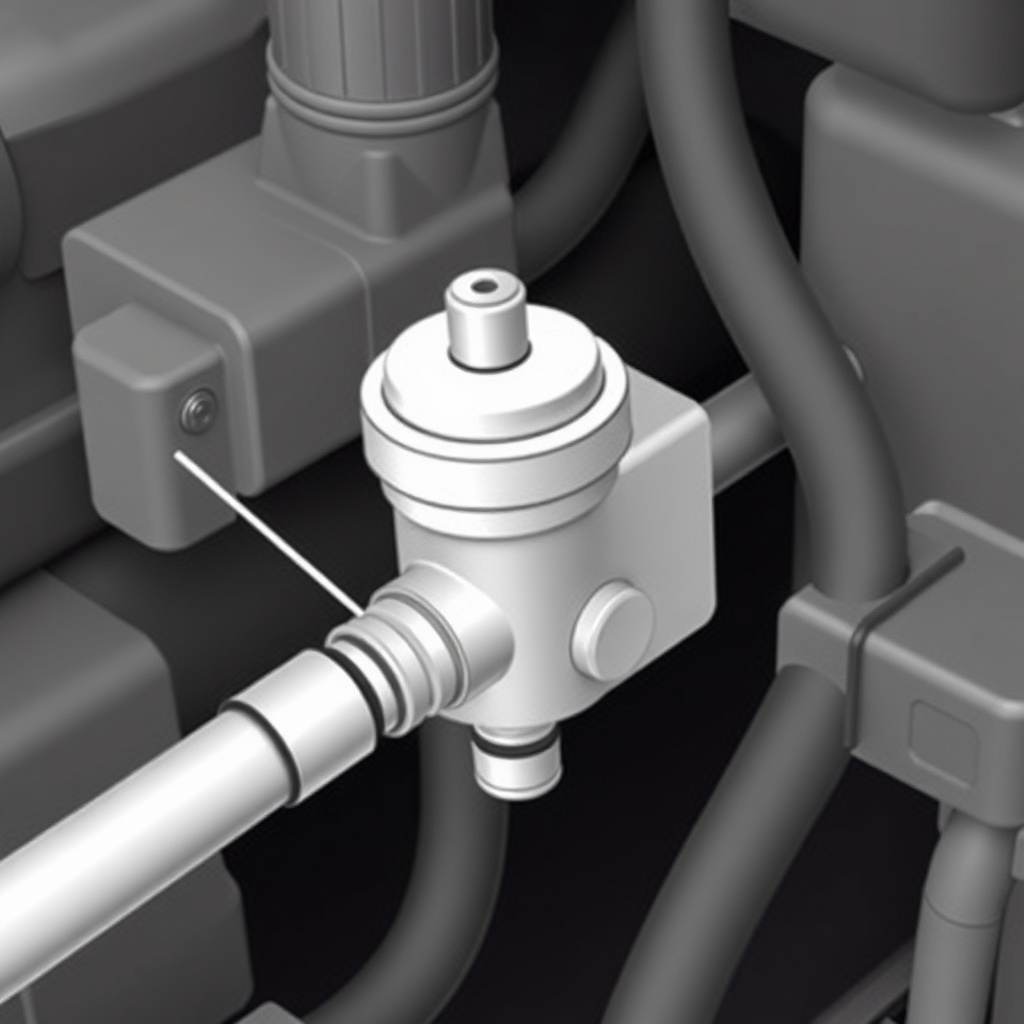
- The Smoke Test Method: The most professional way to diagnose an intake breach is by using an automotive smoke machine. Inject pressurized cosmetic smoke through the brake booster vacuum line or the main intake duct. Watch for smoke escaping from bad throttle body seals, cracked intake manifold gaskets, or a compromised PCV assembly.
Step 3: Assessing the Mass Airflow Sensor Metrics
A contaminated filament wire inside the MAF assembly will trick the vehicle computer into introducing insufficient fuel.
- Start the engine and bring it to normal operating temperature.
- Monitor the MAF sensor g/s (grams per second) data stream on your scanner.
- As a general rule of thumb, a healthy engine should read roughly 1 gram per second per liter of engine displacement at a steady idle (e.g., a 2.0L engine should read close to 2.0 g/s). If the reading is significantly lower (e.g., 1.2 g/s on a 2.0L engine), the sensor is under-reporting air mass, inducing the P0171 code.
6. How to Fix the P0171 Code Permanently
Resolving the P0171 code effectively involves replacing or cleaning the specific components identified during the step-by-step diagnostic process.
Cleaning or Replacing a Contaminated MAF Sensor
If your diagnostics indicated skewed airflow metrics, cleaning the sensor element often resolves the issue without costly parts replacement:
- Disconnect the negative terminal of the car battery.
- Unplug the electrical harness and remove the MAF housing from the intake air box tube.
- Spray the delicate internal platinum hot wire thoroughly using an approved, specialized MAF Sensor Cleaner. Never touch the wire with a physical tool.
- Allow the solvent to air dry completely for 10 minutes, reinstall the housing, and reset the OBD-II diagnostic system codes. If the code returns, replace the unit.
Restoring Fuel Delivery Infrastructure Integrity
When low fuel pressure is the source of your P0171 code system lean configuration error:
- Fuel Filter Replacement: If the fuel filter is an external inline unit and hasn’t been serviced in over 30,000 miles, swap it out immediately to eliminate it as a source of restriction.
- Fuel Pump Replacement: If the pressure gauge confirmed low PSI despite a fresh filter, access the fuel tank service hatch, remove the sending unit assembly, and install a new OEM-grade electric fuel pump.
7. Frequently Asked Questions Regarding the P0171 Code
Can I safely drive my car with an active P0171 code?
It is not recommended to drive a vehicle with an active P0171 code for extended periods. Because a lean mixture elevates combustion chamber temperatures drastically, driving long distances can cause severe internal engine damage, including burnt exhaust valves and cracked pistons. Furthermore, unburned oxygen passing through the exhaust system will quickly overheat and destroy your catalytic converter core, leading to highly expensive repairs.
Will a faulty oxygen sensor directly trigger a P0171 code?
Yes, a biased upstream oxygen sensor or air-fuel ratio sensor can read a perfectly fine stoichiometric mixture as lean. If the sensor element is contaminated by silicone or excessive engine oil blow-by, it under-reports voltage, forcing the PCM into triggering an unneeded positive fuel trim correction loop, resulting in a false P0171 code.
Why does my P0171 code clear up after the engine warms up?
This behavior indicates a classic intake manifold gasket leak. When the engine is cold, the composite plastic intake manifold and its rubber seals contract, leaving a tiny gap that allows unmetered ambient air to enter the engine. As the engine runs, the intense heat causes the plastic and rubber elements to expand, effectively sealing the vacuum leak and dropping the fuel trims back down to normal operational ranges.
8. Summary of Critical OBD-II Diagnostic Targets
To quickly cross-reference your live scanner data when troubleshooting the P0171 code, keep these optimal target values in mind for a standard 4-cylinder engine at normal operating temperature:
| Sensor Component | Expected Target Operational Metric | Potential P0171 Failure Indicator |
|---|---|---|
| Short-Term Fuel Trim (STFT) | Sweeping between -5% and +5% | Staying pinned above +15% to +20% |
| Long-Term Fuel Trim (LTFT) | Stabilized between -8% and +8% | Constant reading exceeding +20% |
| Mass Airflow Sensor (MAF) | ~1.0 g/s per liter of engine displacement | Reading significantly lower than engine size |
| Upstream O2 Sensor (Sensor 1) | Rapidly oscillating between 0.1V and 0.9V | Pinned continuously below 0.2V at idle |
For comprehensive technical documentation on on-board automotive communication standards and code hierarchies, you can review the international guidelines outlined on the ISO Official Portal and check specific automotive software protocols on the SAE International Database to deepen your understanding of automotive electrical diagnostics. Additionally, you can utilize the internal code lookup tools on our platform at ://obd2error.com to quickly find vehicle-specific manufacturer codes that frequently accompany this lean condition.