U0121 Code: Lost Communication With ABS Control Module
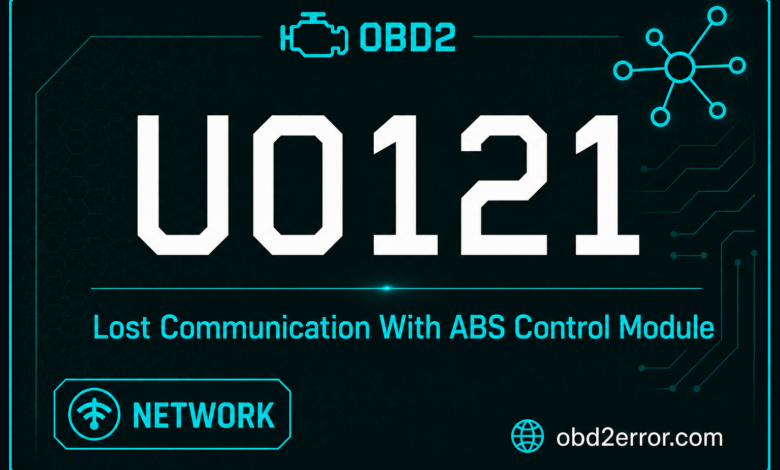
The U0121 code means one or more of your vehicle’s control modules has lost communication with the ABS control module. When the U0121 code is stored, the network connection to the module responsible for managing your anti-lock braking system has broken down — and the vehicle’s safety systems have responded by disabling themselves.
The ABS control module doesn’t just manage anti-lock braking. On most modern vehicles, it’s also the hub for traction control, electronic stability control, and hill descent control. These systems all rely on wheel speed data processed by the ABS module and shared across the CAN bus network. When the U0121 code cuts off that communication, all of those systems go offline simultaneously.
The U0121 code is part of the same family as the U0101 code — lost communication with the TCM — and the U0100 code — lost communication with the ECM. All three involve the CAN bus network, and all three require the same systematic diagnostic approach. But the U0121 code is specific to the ABS module, and its symptoms are distinctly safety-system focused.
What You’ll Notice
- ABS warning light on
- Traction control warning light on or system disabled
- Stability control (ESP/VSC/DSC) warning light on or system disabled
- Multiple warning lights illuminated simultaneously
- On some vehicles, the brake warning light may also illuminate
- Hill descent control disabled on SUVs and trucks
- No change to normal braking feel — standard brakes still work
- Some vehicles may show a generic “Service Required” or “Service StabilityTrak” message
The U0121 code almost always triggers multiple warning lights at once. This is because ABS, traction control, and stability control all depend on the same module. When the U0121 code takes that module offline, all three systems disable together — which is why the dashboard can suddenly light up with several warnings simultaneously for no obvious reason.
Normal braking still works with the U0121 code active. The standard hydraulic braking system operates independently of the ABS module. What’s lost is the anti-lock function, traction control, and stability control — the systems that intervene during emergency situations or when traction is lost.
How the ABS Module Communicates With the Vehicle
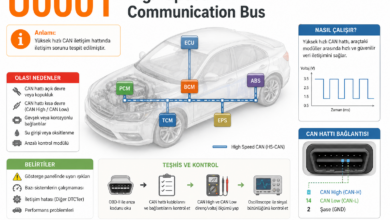
The ABS control module is connected to the vehicle’s CAN bus network — the same communication backbone involved in the U0001 code. Through this network, the ABS module shares wheel speed data with the ECM, the transmission control module, and other systems that need it.
The ECM uses wheel speed data for vehicle speed calculations and torque management. The instrument cluster uses it for the speedometer. The transmission control module uses it for shift logic. When the U0121 code takes the ABS module offline, all of these systems lose the wheel speed data they depend on — which is why the U0121 code can produce symptoms that extend well beyond just the ABS warning light.
According to SAE J1979 OBD-II standards, the U0121 code is stored when the ECM or another module attempts to communicate with the ABS control module and receives no valid response.
What Usually Causes the U0121 Code
1. Faulty ABS control module The ABS module itself has failed. This can result from water ingress, an electrical surge, internal component failure, or simply age on high-mileage vehicles. A failed ABS module produces the U0121 code regardless of the condition of the wiring and CAN bus. Module failure is less common than wiring or connector issues, but it does happen — particularly on vehicles with a history of flooding or aggressive pressure washing near the module.
2. CAN bus wiring fault to the ABS module The wiring connecting the ABS module to the CAN bus network can develop a short circuit, an open circuit, or high resistance from heat damage, vibration, or corrosion. A single damaged wire in the CAN High or CAN Low circuit to the ABS module is enough to knock it off the network and store the U0121 code. This is particularly common on vehicles where the ABS module wiring runs through areas exposed to road salt, moisture, or repeated flexing.
3. Corroded or damaged ABS module connector The connector between the wiring harness and the ABS module is a frequent cause of the U0121 code. The ABS module is typically mounted in the engine bay or near the brake master cylinder — locations exposed to moisture and temperature cycling. Corrosion on the connector terminals, a connector that has partially unseated, or a damaged locking tab that allows the connector to work loose all produce the U0121 code.
4. Weak or failing battery Low battery voltage disrupts CAN bus communication across the entire network. The U0121 code from a weak battery typically appears alongside other communication codes — U0100, U0101, U0155 — because multiple modules lose their connection simultaneously. Always test battery condition before replacing any modules when diagnosing the U0121 code. A battery that tests marginal is the cheapest possible fix.
5. Blown fuse in the ABS module power circuit The ABS module requires dedicated power to operate. A blown fuse in the ABS circuit shuts the module down completely, producing the U0121 code because the module is no longer present on the network. This is one of the first things to check — it takes two minutes and costs nothing to verify.
6. Failed CAN bus termination resistor The CAN bus network requires a 120-ohm termination resistor at each end to function correctly. A failed termination resistor causes signal reflections that prevent reliable communication across the network. The U0121 code from a termination resistor fault typically appears alongside multiple other communication codes because the entire network is affected.
7. Water or moisture damage to the ABS module The ABS module location varies by vehicle, but many are positioned low in the engine bay or near the firewall where water can accumulate. Flood damage, pressure washing at close range, or a persistent water leak can allow moisture into the module and cause the U0121 code. Water-damaged modules typically require replacement.
8. Damaged wheel speed sensor wiring creating feedback faults On some vehicles, severe damage to the wheel speed sensor wiring — not just the sensor itself — can create electrical feedback that disrupts the ABS module’s operation and triggers the U0121 code alongside wheel speed sensor codes. This is less common than direct module or CAN bus faults but worth checking when wheel speed sensor codes accompany the U0121 code.
How Serious Is the U0121 Code?
Serious — particularly in adverse driving conditions.
Normal braking still works with the U0121 code active, so the vehicle is not immediately dangerous in dry conditions at normal speeds. But the loss of ABS, traction control, and stability control removes critical safety systems that prevent wheel lockup during emergency stops, loss of traction during acceleration, and loss of directional control during cornering.
In wet, icy, or snowy conditions, these systems make a significant difference to stopping distance and vehicle control. Driving with the U0121 code in winter conditions or at highway speeds carries real risk.
Many jurisdictions also require functioning ABS for a vehicle to pass a safety inspection. An active U0121 code with the ABS light on will typically cause a failed roadworthiness check. Fix the U0121 code before your next inspection.
How to Diagnose the U0121 Code
Step 1 — Read all stored codes across all modules
Confirm the U0121 code and check every module for companion codes. Multiple U-series codes stored simultaneously — U0121 alongside U0100, U0101, or U0155 — point strongly toward a CAN bus or power supply fault rather than an isolated ABS module failure. A single U0121 with no companion codes is more likely an ABS module-specific fault. The freeze frame data tells you the conditions when communication was lost.
Step 2 — Check the battery and charging system
Test battery voltage at rest — 12.4–12.7V is healthy. Test charging voltage with the engine running — 13.7–14.7V confirms proper alternator output. A marginal battery is one of the most common and cheapest causes of the U0121 code. Replace the battery if it tests below 12.4V at rest before doing anything else.
Step 3 — Check the ABS fuse
Locate the ABS fuse in your vehicle’s fuse box. A blown ABS fuse takes the module completely offline and stores the U0121 code. Replace any blown fuse with the correct amperage rating. If the new fuse blows immediately, there’s a short circuit in the ABS power supply circuit that needs to be traced before fitting another fuse.
Step 4 — Inspect the ABS module connector
Locate the ABS control module — typically in the engine bay near the brake master cylinder or ABS hydraulic unit. Disconnect the connector and inspect it carefully:
- Look for green or white corrosion on the terminal contacts
- Check for moisture or water staining inside the housing
- Verify all pins are fully seated and not bent or pushed back
- Confirm the connector locking tab engages fully when reconnected
Clean any corrosion with electrical contact cleaner, reconnect firmly, and clear the U0121 code. Test drive to see if it returns.
Step 5 — Measure CAN bus resistance
With the ignition off and the scan tool disconnected, measure resistance between the CAN High and CAN Low wires at the OBD2 port. A healthy CAN bus reads approximately 60 ohms. A reading significantly higher indicates an open circuit somewhere on the network. A reading near zero indicates a short between CAN High and CAN Low. Either condition produces the U0121 code and points toward CAN bus wiring repair.
Step 6 — Check ABS module power and ground
With a multimeter, verify the ABS module is receiving proper supply voltage at its power pins and has solid ground connections. No supply voltage means a wiring or fuse fault upstream of the module. A loose or corroded ground connection means the module can’t function even with good power supply — producing the U0121 code.
Step 7 — Attempt ABS module communication with a scan tool
Use a scan tool capable of accessing ABS module data directly. If the scan tool can communicate with the ABS module, the module itself is likely functional and the U0121 code is being caused by a CAN bus wiring fault between the ECM and ABS module. If no scan tool can reach the ABS module despite good power and ground, the module has failed internally.
Step 8 — Inspect CAN bus wiring to the ABS module
Trace the CAN bus wiring from the OBD2 port to the ABS module and check for physical damage. Look for chafing against metal brackets, pinched sections under the battery tray, or areas exposed to heat or road spray. An intermittent U0121 code — one that comes and goes — often traces back to a wiring section that makes contact most of the time but fails under vibration or specific temperatures.
How to Fix the U0121 Code
Replace the battery — If battery voltage is marginal, this is the first repair. A healthy battery resolves U0121 codes caused by low-voltage network disruption and costs far less than module replacement.
Replace the blown ABS fuse — If the ABS fuse is blown, replace it with the correct amperage rating. If it blows again, trace the short circuit in the power supply before fitting another fuse.
Clean or repair the ABS module connector — Clean corroded terminals with electrical contact cleaner and a terminal brush. If terminals are damaged beyond cleaning, replace the connector pigtail. Ensure the connector locks fully when reconnected.
Repair CAN bus wiring — Any damaged, chafed, or broken wiring in the CAN bus circuit to the ABS module needs proper repair using automotive-grade wire and heat-shrink connectors. Secure the repaired harness to prevent future chafing.
Replace the ABS control module — If the module has failed internally — confirmed by no communication on any scan tool despite healthy power, ground, and CAN bus wiring — replacement is required. On most vehicles, ABS module replacement requires programming to the vehicle’s VIN. Some modules also require bleeding the brake system after replacement due to the integrated hydraulic unit.
Address water intrusion — If water damage caused the U0121 code, fix the source of water entry before fitting a new module. A new module installed in a water-prone location fails the same way.
U0121 on Specific Vehicle Makes
General Motors (Chevrolet, GMC, Buick, Cadillac): The U0121 code is well documented on GM trucks and SUVs — particularly the Silverado, Sierra, Tahoe, and Suburban. On these vehicles, the EBCM (Electronic Brake Control Module) connector is a known failure point due to corrosion from road salt and moisture in colder climates. GM has issued technical service bulletins for U0121 on several platforms, often related to the EBCM connector or wiring harness.
Ford: On Ford F-Series trucks, Explorer, and Escape, the U0121 code commonly relates to the ABS module connector or wiring harness damage near the ABS hydraulic unit. Battery condition is also a frequent contributing factor on high-mileage Ford vehicles with U0121.
Toyota and Lexus: The U0121 code on Toyota and Lexus vehicles often involves connector corrosion on the ABS/VSC module — particularly on vehicles in humid or coastal climates. The Skid Control ECU on Toyota vehicles integrates ABS, traction control, and stability control functions, so U0121 on these vehicles takes all three systems offline simultaneously.
Honda and Acura: On Honda CR-V, Pilot, and Odyssey models, the U0121 code is sometimes related to battery condition or ABS module connector issues. Honda’s modular ABS system is generally reliable, but high-mileage examples with degraded connectors do produce U0121.
BMW and Mercedes-Benz: On European vehicles, the U0121 code can sometimes relate to the DSC (Dynamic Stability Control) or ESP module rather than a traditional ABS module. These integrated safety modules are sensitive to voltage fluctuations — battery condition and charging system health are particularly important to check on U0121 diagnoses for European vehicles.
What It Might Cost to Fix the U0121 Code
| Repair | Estimated Cost |
|---|---|
| Battery replacement | $80 – $200 |
| ABS fuse replacement | $5 – $20 |
| Connector cleaning / repair | $50 – $200 |
| CAN bus wiring repair | $150 – $500 |
| ABS module replacement + programming | $300 – $1,200+ |
Costs vary significantly by vehicle make and model. ABS modules with integrated hydraulic units cost more to replace and may require brake system bleeding after installation.
Related Codes
- U0001 — High Speed CAN Communication Bus
- U0100 — Lost Communication With ECM/PCM
- U0101 — Lost Communication With TCM
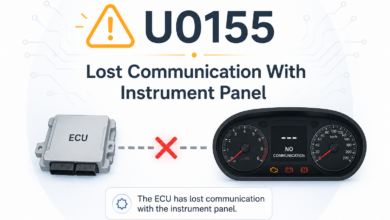
- U0155 — Lost Communication With Instrument Panel
- C0035 — Left Front Wheel Speed Sensor Circuit Malfunction
- C0040 — Right Front Wheel Speed Sensor Circuit Malfunction
- P0571 — Brake Switch A Circuit Malfunction
Frequently Asked Questions
Can I drive with the U0121 code? The car is driveable — normal braking still works. But ABS, traction control, and stability control are all disabled with the U0121 code active. In dry conditions at normal speeds the risk is manageable. In wet, icy, or snowy conditions, or during emergency braking situations, the absence of these systems is genuinely dangerous. Get the U0121 code diagnosed as soon as possible and avoid adverse weather driving until it’s repaired.
Why did multiple warning lights come on at once? Because ABS, traction control, and stability control all depend on the ABS module. When the U0121 code takes that module offline, all three systems disable simultaneously — which is why the dashboard can light up with several warnings at once. This is normal behavior for the U0121 code and doesn’t mean each system has independently failed.
Will the U0121 code clear itself? If the fault is intermittent — a marginal battery or a loose connector — the U0121 code may clear temporarily when conditions improve. But if the underlying fault remains, the code returns. Clearing the U0121 code without fixing the problem just resets the counter temporarily.
How do I know if it’s the ABS module or the wiring? If a scan tool can communicate with the ABS module directly, the module is functional and the U0121 code is caused by a CAN bus wiring fault. If no tool can reach the module despite confirmed good power and ground, the module has failed internally. Always verify power, ground, and fuses before concluding the module is bad.
Is ABS module replacement always needed for the U0121 code? No — module replacement is actually the least common fix. Battery issues, blown fuses, connector corrosion, and CAN bus wiring faults are all more frequent causes of the U0121 code. Replace the ABS module only after all other causes have been definitively eliminated.
Can the U0121 code appear after a battery replacement? Yes — if the battery was replaced incorrectly, if the voltage spiked during replacement, or if the new battery is marginal, the U0121 code can appear. Some vehicles also require a module reset or relearn procedure after battery replacement. If U0121 appeared immediately after a battery change, check that the new battery is fully charged and the terminals are clean and tight.
For more information on ABS systems, vehicle safety standards, and OBD-II diagnostics, visit the National Highway Traffic Safety Administration (NHTSA) or the SAE International standards library.
This guide is for informational purposes only. For an accurate diagnosis, always consult a qualified mechanic.