Car Shaking While Driving: Causes & Fix

Car Shaking While Driving Your car is shaking. The question is: when does it shake, and where do you feel it?
Those two things narrow down the cause faster than anything else. A vibration that starts at 65 mph is a completely different problem from one that happens only when braking, or one that’s there from the moment you start the engine.
First: When and Where Does It Shake?
Before diving into causes, pin down the pattern:
- Shakes at a specific speed (usually 60–75 mph) → wheel balance or tire issue
- Shakes when braking → warped brake rotors
- Shakes at idle or low speed → engine misfire, motor mount, or transmission issue
- Shakes during acceleration → CV axle, driveshaft, or engine misfire
- Steering wheel shakes specifically → front wheel/tire issue, wheel alignment
- Whole car shakes, not just steering wheel → could be rear tires, suspension, or drivetrain
- Shakes only when cold, improves when warm → often a misfire or fuel delivery issue
Most Common Causes
1. Unbalanced or Damaged Tires
The most common cause of highway-speed vibration. Tires that are out of balance create a rhythmic bounce at specific speeds — typically 55–75 mph. It often gets worse, then better, then worse again as speed increases.
Also check: Tires with flat spots (from sitting for a long time), bubbles in the sidewall, or uneven wear. Any of these can cause vibration that balancing won’t fix.
Fix: Wheel balancing at any tire shop — usually $15–$25 per wheel. If a tire is damaged, it needs replacement.
2. Wheel Alignment Issues
Misalignment doesn’t always cause shaking directly, but it causes uneven tire wear — which then causes shaking. If your tires are wearing unevenly (more on one edge than the other), alignment is likely involved.
Other signs: Car pulls to one side, steering wheel isn’t centered when driving straight.
Fix: Wheel alignment — $80–$150 at most shops. Often needed after hitting a pothole or curb.
3. Warped Brake Rotors
If the shaking happens specifically when you apply the brakes — especially at highway speeds — warped rotors are the likely cause. You’ll feel it through the brake pedal and sometimes the steering wheel.
How to confirm: Does the shaking only happen when braking? Does the brake pedal pulse up and down under your foot? That’s warped rotors.
Fix: Rotor resurfacing ($30–$80 per axle) if there’s enough material left, or rotor replacement ($150–$400 per axle including labor).
4. Worn Suspension Components
Worn shocks, struts, ball joints, tie rod ends, or bushings can all cause vibration — especially over bumps or at higher speeds. The vibration often feels more like a shimmy or wobble than a smooth oscillation.
Signs: Clunking over bumps, car bounces excessively after a bump, uneven tire wear.
How to check: With the car parked, grab each front tire at 9 and 3 o’clock and try to wiggle it. Then grab at 12 and 6 o’clock. Any play indicates a worn ball joint or tie rod. A mechanic can put it on a lift and check more thoroughly.
Fix: Depends on the component. Ball joints and tie rod ends: $150–$400 per side. Shocks/struts: $300–$700 per axle including labor.
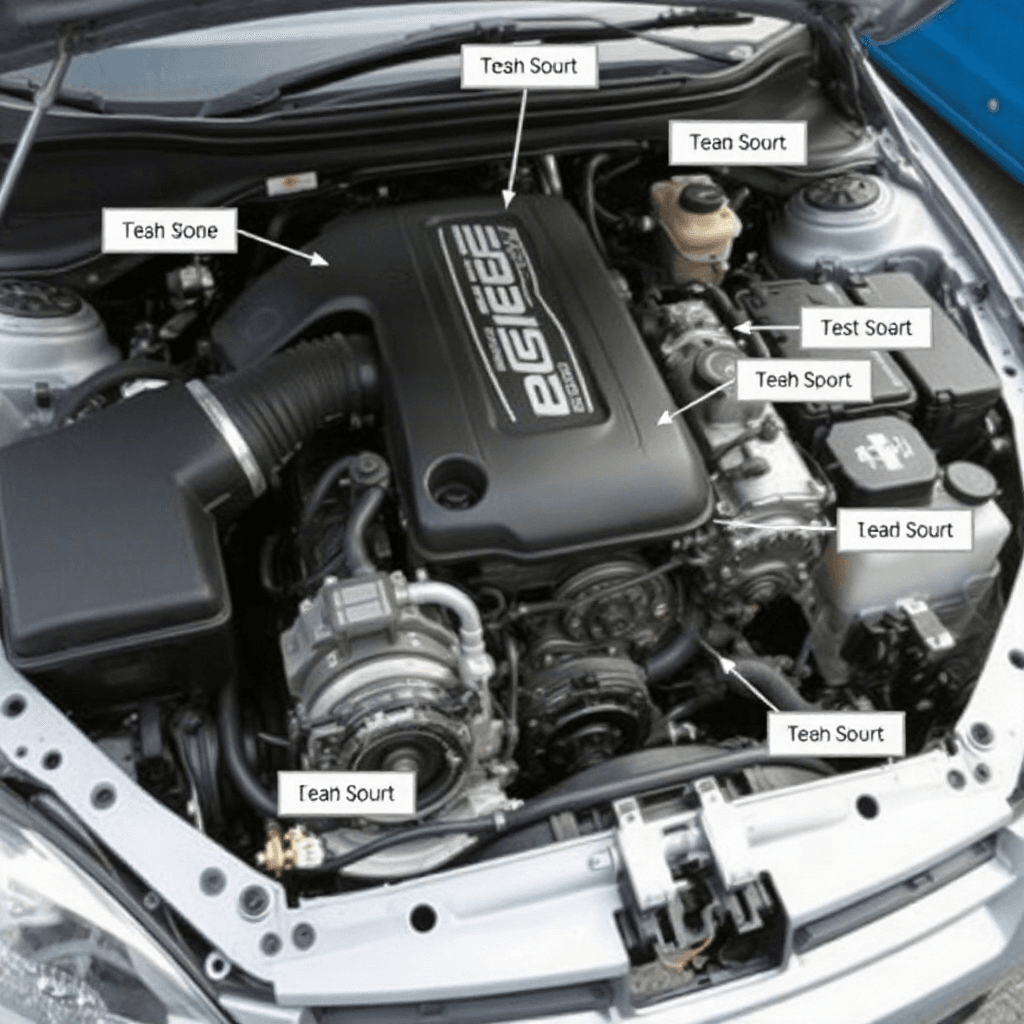
5. Engine Misfire
A misfiring engine causes a rough, uneven shaking — often felt at idle or under light acceleration. Unlike tire vibration, misfire shaking tends to be irregular and rhythmic with engine RPM rather than vehicle speed.
Signs: Check engine light (often flashing), rough idle, hesitation when accelerating, sometimes a popping or stumbling sensation.
Common causes of misfire:
- Worn spark plugs
- Failing ignition coil
- Clogged fuel injector
- Vacuum leak
Fix: Read the fault code first — P0300 means random misfire, P0301–P0308 pinpoints a specific cylinder. Spark plug replacement is the first thing to try: $50–$150 DIY depending on the engine. Ignition coil: $80–$200 per coil.
If the check engine light is flashing, the misfire is severe enough to damage the catalytic converter. Don’t drive hard until it’s fixed.
6. CV Axle or Driveshaft Issues
On front-wheel drive cars, worn CV (constant velocity) joints cause a clicking or vibrating sensation during acceleration — especially when turning. On rear-wheel drive or AWD vehicles, a worn driveshaft U-joint causes a vibration that appears during acceleration and disappears at steady speed.
How to identify CV joint wear: Drive slowly in a tight circle. A clicking sound from the front that gets louder during turns is a worn outer CV joint.
Fix: CV axle replacement: $200–$500 per axle including labor. U-joint replacement: $150–$350.
7. Worn or Broken Motor Mounts
Motor mounts hold the engine to the chassis and absorb vibration. When they wear out or crack, engine vibration transfers directly into the cabin. This typically feels like a strong vibration at idle that smooths out at higher RPM.
Signs: Clunking or thumping when shifting into drive or reverse, excessive engine movement visible under the hood when revving.
Fix: Motor mount replacement: $200–$500 per mount including labor. Most engines have 3–4 mounts.
8. Loose or Damaged Heat Shield
This one’s easy to overlook. The heat shields around the exhaust system can rust, crack, or come loose — causing a rattling or vibrating sound that changes with engine RPM. It often sounds worse when the engine is cold.
How to check: With the car parked and engine off, reach under and push/pull on the heat shields around the exhaust. If one is loose, you’ll feel it move.
Fix: Tighten the mounting bolts or replace the shield — usually a $20–$80 repair.
Diagnosing It Yourself: A Logical Sequence
Step 1 — Define when it happens Write down: speed, conditions (braking, accelerating, steady), whether it’s in the steering wheel or the whole car, whether it’s worse when cold or hot.
Step 2 — Check the tires first Visually inspect all four tires for damage, bubbles, or uneven wear. Check pressures. This rules out the most common cause quickly.
Step 3 — Note any warning lights If the check engine light is on, read the code before spending money on anything. A misfire code points directly to the cause.
Step 4 — Test during braking Does the shaking only appear when you apply the brakes? If yes, focus on the brake system.
Step 5 — Feel where it comes from Steering wheel only = front end issue. Whole car = could be rear tires, rear suspension, or drivetrain.
Repair Cost Summary
| Cause | DIY Cost | Shop Cost |
|---|---|---|
| Wheel balancing | — | $60–$100 (all 4) |
| Wheel alignment | — | $80–$150 |
| Brake rotor replacement | $80–$200 parts | $150–$400 per axle |
| Spark plug replacement | $20–$80 parts | $80–$200 |
| Ignition coil | $30–$80 per coil | $150–$300 |
| CV axle replacement | $80–$200 parts | $200–$500 |
| Shock/strut replacement | $150–$400 parts | $300–$700 per axle |
| Motor mount | $50–$150 parts | $200–$500 |
Frequently Asked Questions
Is it safe to drive a shaking car? It depends on the cause. A slight vibration from unbalanced tires is low risk in the short term. Shaking during braking (warped rotors), a flashing check engine light (severe misfire), or a car that pulls strongly to one side are higher-risk situations that need attention sooner.
My car only shakes at highway speeds — what is it? Almost certainly a wheel balance or tire issue. Get the tires balanced first. If that doesn’t fix it, check for a bent wheel or damaged tire.
The shaking started suddenly — what happened? Sudden onset often means something broke or came loose rather than gradually wore out. Common culprits: a tire picking up a nail or losing air, a wheel weight falling off, a loose heat shield, or a failing ignition coil.
The mechanic said I need new tires, but I just balanced them — will new tires fix the shaking? Maybe. If tires have flat spots, internal belt separation, or severe uneven wear, balancing won’t help. A tech can spin each tire on the balancer and see if it’s out of round — that tells you whether the tire itself is the problem.
Can a shaking car damage other parts over time? Yes. Ignoring a misfire can destroy the catalytic converter. Driving on worn suspension components accelerates tire wear. Warped rotors wear brake pads unevenly. Vibrations from a failing CV joint will eventually cause the joint to fail completely — usually at an inconvenient moment.
Start with the tires and work your way through the list. Most vibration problems are mechanical and straightforward to diagnose — the key is narrowing down when and where the shaking occurs.