P0307 Code: Comprehensive Guide to Diagnosis, Causes, Symptoms, and Complete Repair

When your vehicle’s dashboard illuminates with a Check Engine Light, it is always a cause for concern. If an OBD2 scanner reveals the P0307 code, your vehicle is alerting you to a specific performance issue within its powertrain system: a detected misfire in cylinder number 7. This diagnostic trouble code (DTC) indicates that the Powertrain Control Module (PCM) or Engine Control Module (ECM) has tracked an interruption or failure in the combustion cycle of the seventh cylinder. Because this code isolates a single cylinder, it specifically occurs in larger configuration engines—such as V8, V10, or V12 setups—where a seventh cylinder exists. Ignoring a localized misfire can quickly transform a minor component replacement into a catastrophic mechanical failure, making an immediate, structured diagnostic approach absolutely necessary.
What Does the P0307 Code Mean? Deep Technical Insight
To understand the gravity of the P0307 code, one must examine how a modern internal combustion engine maintains balanced operation. In a multi-cylinder engine, smooth power delivery relies on a precisely timed sequence of explosions. Every individual cylinder must contribute an identical amount of rotational force (torque) to the crankshaft during its respective power stroke.
The PCM monitors this contribution continuously by utilizing the Crankshaft Position (CKP) sensor and the Camshaft Position (CMP) sensor. The CKP sensor tracks a reluctor wheel attached to the crankshaft, reading minuscule changes in angular velocity. When a specific cylinder fires, the crankshaft experiences a brief, predictable acceleration. If cylinder 7 fails to fire correctly, the expected acceleration does not occur, resulting in a momentary drop in crankshaft speed during that cylinder’s scheduled power stroke.
If the PCM detects this micro-deceleration occurring consistently over a specific number of engine revolutions (typically calculated over 200 or 1,000 RPM cycles), it confirms a misfire. The system then logs the specific code for that cylinder. It belongs to the exact same diagnostic family as other sequential misfire identifiers; for instance, while a P0306 code indicates that the fault is isolated to cylinder number 6, the presence of the P0307 code tells the technician to focus all diagnostic, physical, and mechanical evaluations exclusively on cylinder number 7.
The Chemistry and Physics of an Engine Misfire
Every internal combustion engine relies on the classic “fire triangle” modified for automotive thermodynamics: Fuel, Spark, and Air/Compression. If any single one of these variables deviates from strict factory specifications within cylinder 7, a misfire occurs.
- The Spark Factor: The ignition system must deliver a high-voltage electrical arc (often exceeding 30,000 volts) across the spark plug gap at the exact microsecond the piston reaches the optimal position near Top Dead Center (TDC).
- The Fuel Factor: The fuel delivery system must atomize gasoline or diesel into a fine mist, mixing it precisely at a stoichiometric ratio (typically 14.7 parts of air to 1 part of fuel for gasoline engines) directly inside the combustion chamber or intake runner.
- The Compression Factor: The mechanical components—valves, pistons, rings, and gaskets—must tightly seal the combustion chamber. This compression raises the temperature and density of the air-fuel mixture, ensuring a rapid, complete flame propagation when the spark occurs.
When any of these parameters are compromised, the chemical reaction stalls, raw fuel is pumped straight into the exhaust system, and the vehicle enters a compromised operating state.
Comprehensive Symptoms of a P0307 Diagnostic Trouble Code
A misfire in a single cylinder of a large displacement engine produces highly noticeable symptoms. Depending on whether the misfire is constant or intermittent, you will encounter a combination of the following indicators:
1. Flashing vs. Solid Check Engine Light (CEL)
The behavior of your malfunction indicator lamp provides immediate insight into the severity of the condition:
- Solid Light: Indicates a steady or intermittent misfire that is increasing emissions beyond acceptable environmental standards. While serious, it allows you to drive the vehicle safely to a nearby repair facility.
- Flashing Light: This indicates a severe, catalyst-damaging misfire. When the CEL flashes, a massive volume of unburnt fuel is entering the exhaust stream and burning inside the catalytic converter, causing temperatures to skyrocket past 1,600°F (870°C). This can melt the internal ceramic substrate within minutes. If the light flashes, pull over safely and turn off the engine immediately.
2. Severe Engine Vibrations and Rough Idling
Because a V8 or V12 engine relies on harmonic balance, losing the power stroke of cylinder 7 creates a structural imbalance. You will feel a distinct shudder or rhythmic shaking through the steering wheel, seat, and floorboards. This vibration is most pronounced at a complete stop (rough idling) and may slightly smooth out at higher engine speeds, though the underlying efficiency loss remains.
3. Sluggish Acceleration and Power Loss
When you demand power from the engine—such as passing another vehicle or climbing a steep incline—the loss of an entire cylinder’s power output becomes highly obvious. The engine will hesitate, bog down, or feel as though it is fighting its own internal mass to increase speed.
4. Decreased Fuel Economy
When a cylinder misfires, the fuel injected into that cylinder is completely wasted. Furthermore, the unburnt oxygen traveling past the Upstream O2 sensor tricks the PCM into believing the entire engine is running dangerously lean. In response, the computer commands the fuel injectors across the other cylinders to dump extra fuel, drastically increasing overall fuel consumption.
5. Hydrocarbon Odors and Discolored Exhaust
Unburnt fuel traveling through the hot exhaust system creates a heavy, pungent smell of raw gasoline at the tailpipe. In severe cases, you may notice darker or hazy smoke exiting the exhaust system due to incomplete combustion.
Common and Uncommon Causes Behind Cylinder 7 Misfire
Isolating the root cause of a P0307 code requires categorizing potential faults into three primary groups: ignition failures, fuel delivery discrepancies, and internal mechanical breakdown.
       ┌────────────────────────────────────────────────────────┐
       │                 P0307 Fault Framework                  │
       └───────────────────────────┬────────────────────────────┘
                                   │
         ┌─────────────────────────┼─────────────────────────┐
         ▼                         ▼                         ▼
┌─────────────────┐       ┌─────────────────┐       ┌─────────────────┐
│ Ignition Faults │       │   Fuel Faults   │       │Mechanical Faults│
└────────┬────────┘       └────────┬────────┘       └────────┬────────┘
         ├─ Old Spark Plug        ├─ Clogged Injector       ├─ Head Gasket
         ├─ Bad Coil Boot         ├─ Wiring Open/Short      ├─ Leaking Valve
         └─ Failed Coil pack      └─ Low Rail Pressure      └─ Worn Cam Lobe
Ignition System Culprits (Most Common)
- Fouled or Worn Spark Plug: Over time, spark plug electrodes erode, increasing the gap size beyond what the ignition coil can bridge. Alternatively, carbon tracking, oil fouling from leaking valve stem seals, or coolant intrusion can short out the spark plug entirely.
- Defective Ignition Coil (Coil-on-Plug): Modern engines utilize an individual coil for each cylinder. If the internal windings of the cylinder 7 coil break down or short out due to engine heat, it will fail to produce a high-voltage charge.
- Damaged Coil Boot or Spark Plug Wire: On older designs with plug wires, or on modern COP systems with rubber insulating boots, tiny micro-cracks can allow the electrical spark to arc outward against the engine cylinder head rather than traveling downward to the spark plug tip.
Fuel Delivery Disruptions
- Clogged or Faulty Fuel Injector: If the fuel injector for cylinder 7 is restricted by varnish buildup, carbon, or debris, it will deliver an insufficient volume of fuel, causing a lean misfire. Conversely, a stuck-open injector will flood the cylinder, causing a rich misfire.
- Injector Circuit Failures: The electrical wiring harness leading to the injector can suffer from heat degradation, causing open circuits, high resistance, or broken connector clips that prevent the PCM from pulsing the injector correctly.
Internal Mechanical Failures (Most Expensive)
- Intake Manifold Vacuum Leaks: A breach in the intake manifold gasket directly adjacent to the cylinder 7 intake runner allows unmetered air to be sucked into the cylinder, throwing off the air-fuel ratio completely.
- Loss of Cylinder Compression: Mechanical components can wear down or fail. Common root causes include a blown head gasket leaking compression into an adjacent jacket, burned or bent intake/exhaust valves that no longer seat properly, worn piston rings, or a flat lobe on the camshaft preventing the valves from opening fully.
Step-by-Step Diagnostic Protocol for the P0307 Code
To diagnose a P0307 code efficiently without wasting money on unneeded parts, follow this structured, professional-grade diagnostic workflow.
Step 1: Read and Record Live Data
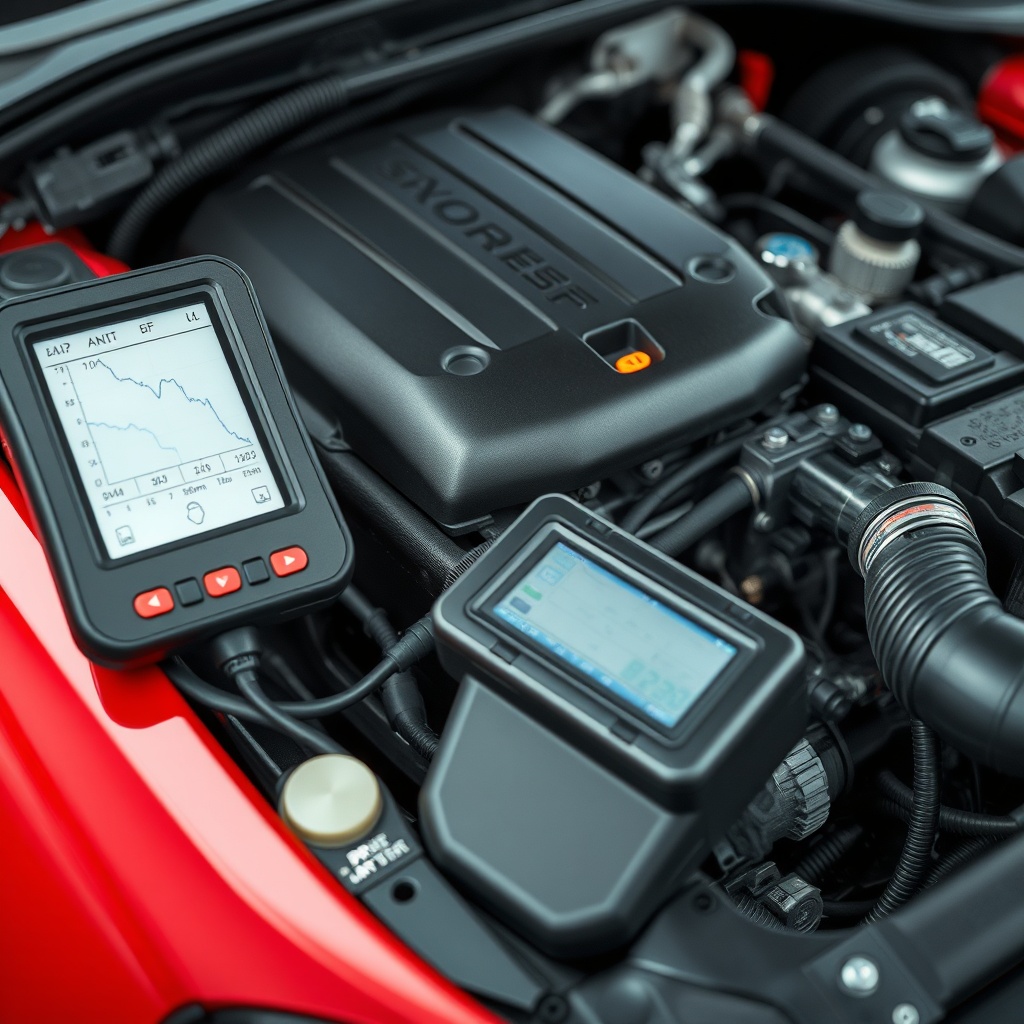
Connect an advanced OBD2 diagnostic scanner to the vehicle’s data link connector (DLC). Access the freeze frame data associated with the P0307 code. Note the exact engine speed, engine load, and coolant temperature when the code was logged. Next, look at the Short-Term Fuel Trims (STFT) and Long-Term Fuel Trims (LTFT).
- If the fuel trims are highly positive (above +10%), it indicates an air-leak or lack of fuel (lean condition).
- If the fuel trims are negative, it points toward a rich condition, such as a leaking injector.
Step 2: Perform the Component Swap Test (The Gold Standard)
The fastest way to isolate an ignition component fault is through process-of-elimination component swapping.
- Turn off the engine and remove the engine cover.
- Locate cylinder number 7 (Consult your vehicle’s factory service manual or firing order diagram to verify its physical position).
- Swap the ignition coil from cylinder 7 with the coil from an adjacent cylinder (e.g., cylinder 5).
- Clear the OBD2 trouble codes using your scanner.
- Take the vehicle for a test drive under the same operating conditions recorded in the freeze frame data.
- Rescan the vehicle. If the code shifts from P0307 to P0305, you have successfully isolated the fault: the ignition coil is defective. If the code remains P0307, proceed to the next step.
Step 3: Inspect Spark Plug and Wire Integrity
If the coil swap does not move the code, remove the spark plug from cylinder 7 for physical examination. Inspect the color of the ceramic insulator and the condition of the firing tip:
- Light tan/grey: Normal combustion condition.
- Heavy black carbon: Indicates an overly rich mixture or insufficient spark.
- Wet oil coating: Points toward mechanical wear, such as failed piston rings or valve guides allowing oil into the combustion chamber.
- Blistered white or melted electrodes: Indicates extreme lean conditions or incorrect heat range selection.
Check the plug gap using a precision gapping tool and compare it to factory specs. If the plug is worn or damaged, replace it.
Step 4: Evaluate Fuel Injector Performance
If the ignition components are verified to be fully functional, focus shifts to fuel delivery. Use a digital multimeter to test the electrical resistance (ohms) across the two terminals of the cylinder 7 fuel injector, comparing the value against neighboring injectors.
Additionally, connect a Noid Light to the injector wiring harness plug and crank the engine. If the light flashes rhythmically, the PCM is successfully delivering the electrical pulse command. To check for mechanical clogging, an injector pulse tester can be utilized to measure pressure drops across the fuel rail.
Step 5: Execute a Mechanical Compression Test
If spark and fuel systems function perfectly, the root issue is likely mechanical. Remove the spark plug from cylinder 7 and thread an automotive compression gauge tightly into the spark plug hole. Disable the fuel system, fully depress the accelerator pedal to open the throttle body, and crank the engine over 5 to 6 times. Note the peak pressure reading. Repeat this test on all remaining cylinders.
Diagnostic Threshold: For proper operation, cylinder 7’s compression reading must be within 10% to 15% of the highest-reading cylinder on the engine block. A reading below 100 PSI generally indicates a critical mechanical failure.
Comprehensive Repair Matrix and Financial Estimations
Resolving a P0307 code can vary drastically in cost depending on the component that failed. The grid below outlines standard fixes, part costs, and typical shop labor requirements.
| Diagnosed Root Cause | Required Repair Action | Estimated Parts Cost (USD) | Estimated Labor Time |
| Defective Spark Plug | Replace spark plug (recommended as a complete set) | $10 – $25 (per plug) | 0.5 – 1.5 Hours |
| Failed Ignition Coil | Replace cylinder 7 ignition coil pack | $40 – $120 | 0.5 – 1.0 Hours |
| Clogged Fuel Injector | Professionally clean or replace fuel injector | $60 – $200 | 1.0 – 2.5 Hours |
| Intake Manifold Leak | Replace upper/lower intake manifold gaskets | $30 – $80 | 2.0 – 4.5 Hours |
| Blown Head Gasket | Replace head gasket, machine cylinder head | $150 – $300 | 8.0 – 15.0 Hours |
| Burned / Bent Valve | Cylinder head overhaul, valve replacement | $200 – $500 | 10.0 – 18.0 Hours |
Vehicle-Specific Nuances and Known Factory Quirks
While the P0307 code applies globally across all OBD2 compliant vehicles, certain vehicle platforms have well-documented mechanical tendencies that can jump-start your diagnostic process:
- Ford Trucks (4.6L, 5.4L, 6.8L Modular Engines): These powerplants are notorious for deep spark plug wells that can trap moisture or oil from leaking valve cover gaskets, shorting out the long coil boots. Older 2-valve variants are also known for spitting spark plugs completely out of the aluminum threads, destroying the cylinder head threads instantly.
- General Motors (5.3L, 6.0L, 6.2L V8 Gen IV Engines): Engines equipped with Active Fuel Management (AFM) or Dynamic Fuel Management (DFM) cylinder deactivation systems frequently suffer from collapsed lifters. If the specialized oil-switching lifter for cylinder 7 fails mechanically, the valves will remain closed, resulting in an immediate, hard P0307 misfire code accompanied by heavy valve-train ticking.
- Dodge/RAM (5.7L Hemi Engines): The “Hemi Tick” is a famous issue caused by oil starvation or lifter roller bearing failures. When the roller bearing inside the lifter seizes, it rapidly grinds down the corresponding camshaft lobe for that cylinder, preventing the intake or exhaust valves from opening sufficiently to sustain combustion.
Preventive Measures for Avoiding Misfire Codes
The most effective way to manage the P0307 code is to prevent it through regular, proactive vehicle maintenance:
- Adhere to Spark Plug Service Intervals: Do not wait for a misfire to replace your spark plugs. Standard copper plugs should be swapped every 30,000 miles, while high-performance Platinum or Iridium plugs should be replaced every 60,000 to 100,000 miles.
- Use Premium Fuel Additives: Periodically add a high-quality fuel system cleaner containing Polyetheramine (PEA) to your fuel tank. This breaks down carbon crust and varnish buildup on fuel injector nozzles, maintaining an optimized spray pattern.
- Fix Oil and Coolant Leaks Immediately: If you notice oil leaking from your valve covers or a minor loss of engine coolant, fix it before the fluids seep into the ignition system components or degrade the engine’s internal sealing gaskets.
By approaching the P0307 code with structured diagnostic logic—ruling out ignition, inspecting fuel delivery, and verifying mechanical compression—you can successfully pinpoint the root problem, execute a targeted repair, and restore your engine to its original operating efficiency.
FAQ: Frequently Asked Questions About the P0307 Code
1. Is it safe to drive my vehicle with a P0307 code?
No, it is not recommended to drive your vehicle for extended periods with an active P0307 code. A persistent misfire allows unburnt fuel to pass into the exhaust system, which can rapidly overheat and destroy your catalytic converter—a highly expensive component to replace. If your Check Engine Light is flashing, you should pull over immediately and tow the vehicle, as this indicates critical, active engine damage is occurring.
2. Can a bad oxygen (O2) sensor trigger a specific P0307 code?
Generally, no. A faulty oxygen sensor will typically cause engine-wide issues, leading to system-wide lean or rich codes (such as P0171 or P0174) or a random multi-cylinder misfire code (P0300). Because the P0307 code is strictly isolated to cylinder number 7, the root cause is almost always localized to that specific cylinder’s ignition, fuel delivery, or mechanical sealing components.
3. Will a P0307 code clear itself after I replace the bad spark plug?
While the vehicle’s Powertrain Control Module (PCM) will eventually clear the code automatically after completing several successful “drive cycles” without detecting a misfire, it is best practice to clear the code manually using an OBD2 scanner. Manual clearing resets the engine’s long-term monitors and allows you to immediately verify if your repair successfully resolved the issue.
4. How do I physically find cylinder number 7 on my engine?
Cylinder numbering schemas vary completely depending on the vehicle manufacturer:
- General Motors & Chrysler (Hemi): Cylinder 7 is traditionally located at the very back of the engine block on the driver’s side (left side when sitting in the vehicle).
- Ford: Ford numbers their cylinders sequentially from front to back down each bank. On a standard V8, cylinder 7 is the third cylinder down on the driver’s side (left bank).
Always consult your vehicle’s specific factory service manual or firing order diagram before removing components.
5. Can a localized vacuum leak cause a single cylinder misfire like P0307?
Yes. If the intake manifold gasket develops a precise leak or tear directly adjacent to the intake runner feeding cylinder 7, unmetered air will enter only that specific combustion chamber. This results in a localized lean air-fuel mixture that causes a P0307 code, while the remaining cylinders continue to operate at a normal, stoichiometric ratio.
6. What is the difference between a P0307 code and a P0300 code?
The difference lies in specificity:
- P0307 is a highly specific diagnostic trouble code that isolates the misfire condition exclusively to cylinder number 7.
- P0300 is a generic code indicating a “Random/Multiple Cylinder Misfire,” meaning the PCM is tracking misfires across multiple cylinders simultaneously, moving randomly throughout the engine block.