Active vs. Passive Wheel-Speed Sensors: How to Identify and Test Each Type
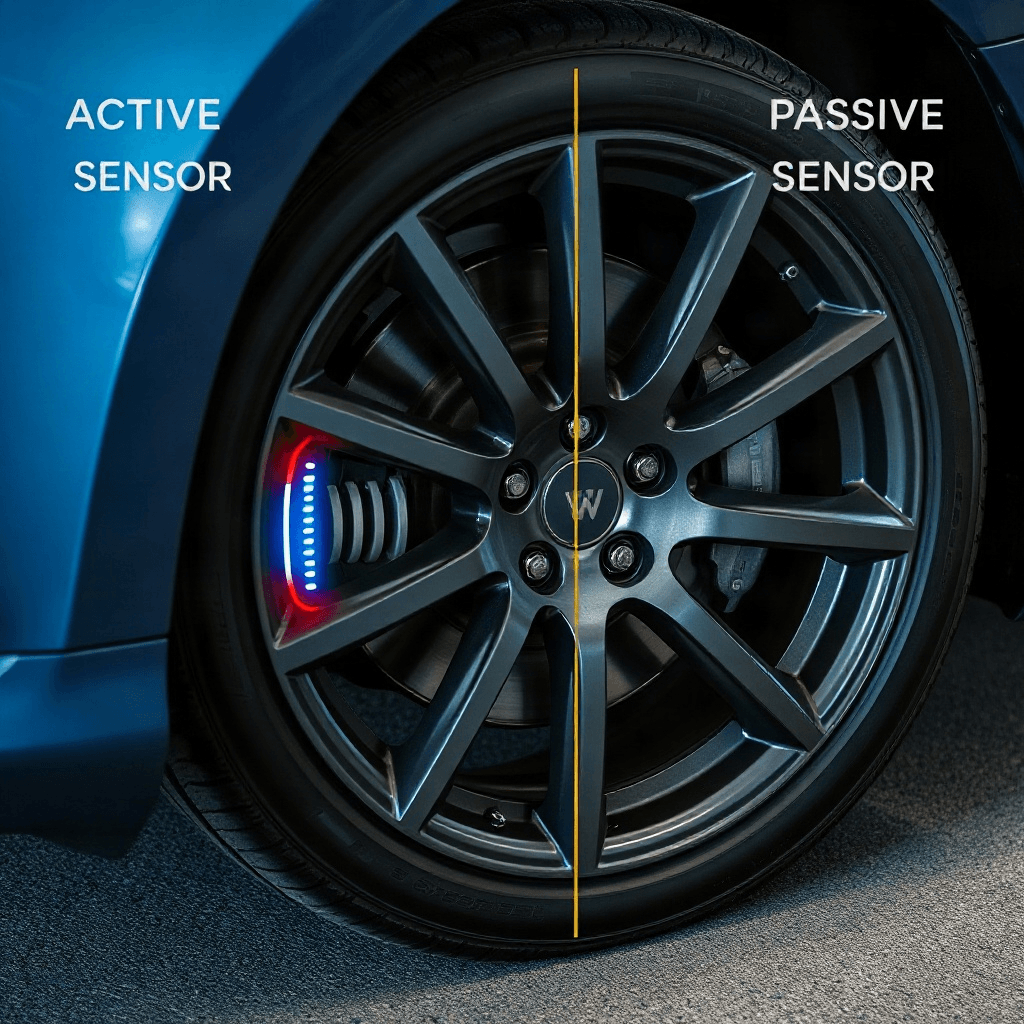
In the world of automotive technology, wheel-speed sensors play a crucial role in ensuring the safety and efficiency of modern vehicles. These sensors are integral to systems such as Anti-lock Braking Systems (ABS), Traction Control Systems (TCS), and Electronic Stability Control (ESC). As vehicles become more advanced, the distinction between active and passive wheel-speed sensors becomes increasingly important for both manufacturers and mechanics. Understanding how to identify and test each type can lead to more effective maintenance and troubleshooting, ultimately enhancing the overall performance and safety of vehicles.
Understanding Wheel-Speed Sensors
Wheel-speed sensors are devices that measure the rotational speed of a vehicle’s wheels, providing essential data for various electronic systems. These sensors can be broadly categorized into two types: active and passive. Active sensors, also known as Hall effect sensors, rely on a power supply to generate a magnetic field, which then interacts with a toothed wheel to produce a signal. Passive sensors, on the other hand, do not require an external power source; they work by generating an AC signal based on the wheel’s rotation. The choice between active and passive sensors largely depends on the specific requirements of the vehicle’s systems and the desired level of accuracy.
Key Differences Between Active and Passive Sensors
When comparing active and passive wheel-speed sensors, several notable differences emerge. Active sensors are known for their precision and ability to function effectively at lower speeds, making them ideal for advanced safety systems. They also offer better signal quality and can detect directional rotation, which is crucial for systems like ESC. However, active sensors are generally more complex and expensive than their passive counterparts. Passive sensors, while simpler and more cost-effective, may struggle with accuracy at lower speeds and are typically unable to determine the direction of wheel rotation. Understanding these differences is essential for selecting the right type of sensor for a specific application.
Identifying Active and Passive Sensors
Identifying whether a wheel-speed sensor is active or passive is a vital step in the testing and maintenance process. Active sensors often have three wires: power, ground, and signal, whereas passive sensors usually have two wires for the signal and ground. The physical appearance can also provide clues; active sensors are generally more compact and require a connection to the vehicle’s electrical system. By examining these attributes, mechanics and technicians can accurately determine the type of sensor they are dealing with, allowing for appropriate diagnostic procedures.
Testing Procedures for Each Sensor Type
Testing wheel-speed sensors requires different approaches depending on whether the sensor is active or passive. For active sensors, a multimeter can be used to check the power supply voltage and ground connection. Additionally, an oscilloscope may be employed to examine the sensor’s output waveform for consistency and accuracy. For passive sensors, testing involves measuring the resistance between the signal and ground wires, as well as checking for an AC voltage signal when the wheel is spun. These diagnostic techniques enable professionals to identify issues such as faulty wiring, poor connections, or sensor malfunctions, ensuring that the vehicle’s safety systems function optimally.
The Impact of Sensor Choice on Vehicle Performance
The choice between active and passive wheel-speed sensors can have a significant impact on vehicle performance and safety. Active sensors, with their higher accuracy and ability to detect directional rotation, are better suited for modern vehicles equipped with advanced safety features. Passive sensors, while less precise, offer a cost-effective solution for older or less complex systems. When selecting sensors, it is crucial to consider the specific requirements of the vehicle’s electronic systems and the desired balance between performance, reliability, and cost. This choice can directly affect the efficiency of safety systems and the overall driving experience.
Future Trends in Wheel-Speed Sensor Technology
As automotive technology continues to evolve, the development of wheel-speed sensors is expected to advance as well. Emerging trends include the integration of smart sensors capable of real-time data analysis and communication with other vehicle systems. Additionally, advancements in materials and sensor design may lead to more robust and versatile solutions, capable of withstanding harsh environmental conditions. As these technologies progress, the line between active and passive sensors may blur, offering new opportunities for innovation in vehicle safety and performance. Keeping abreast of these trends is essential for professionals in the automotive industry, ensuring they are prepared to adapt to the ever-changing landscape of vehicle technology.